
“Rosa is on a mission, and perfectly placed to help inspire a much-needed transformation in our relationship with the planet.” – Liz Bonnin
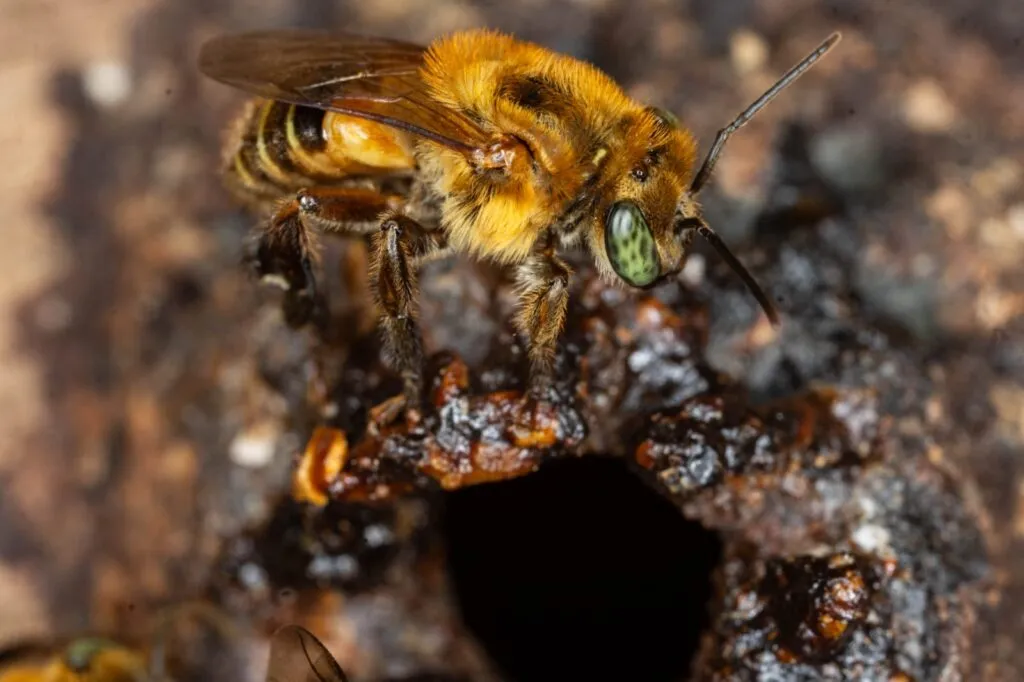
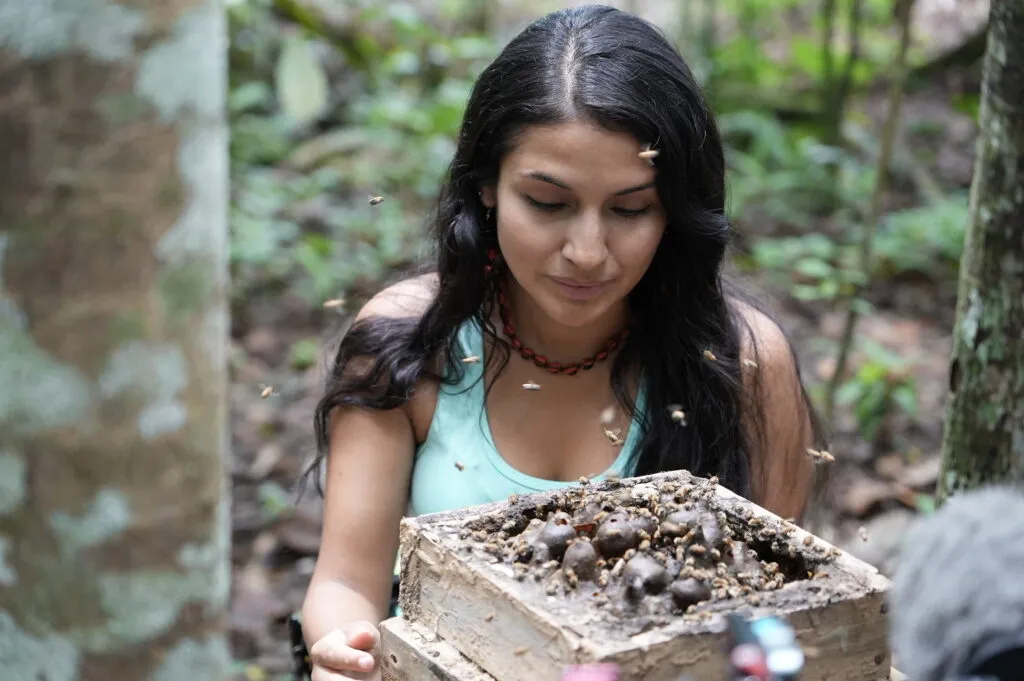
Peru-born chemical biologist and National Geographic Explorer Dr Rosa Vásquez Espinoza is pioneering efforts to protect the Amazon’s stingless bees, whose remarkable medicinal honey has been used by Indigenous communities for generations. Named one of the BBC’s 100 most influential women, a UNESCO Laureate and Rolex Perpetual Planet Laureate, her groundbreaking work brings together cutting-edge science and Indigenous knowledge to protect the rainforest and its extraordinary biodiversity.
In her debut book, The Spirit of the Rainforest, she takes readers deep into one of the planet’s least-explored regions, from encounters with a boiling river and the mysteries of medicinal honey to her own experience with ayahuasca. We caught up with Rosa to discuss her lifelong fascination with the Amazon, the remarkable world of stingless bees, and how responsible tourism can help protect the rainforest and the communities who call it home.
Where did your fascination with the rainforest first begin, and what was it that inspired you to make it your career?
From the age of one, I spent a lot of my childhood in the Amazon rainforest, where we had family and friends. It felt like a second home to me – somewhere to play and explore – and that definitely contributed to my love of nature.
My grandmother is a traditional healer originally from the Andean Mountains, but we have heritage from the Amazon a few generations prior, and she’s still alive. She made sure that there was a whole plethora of medicinal plants in our garden in Lima, where I went to school.
Later, when I started learning science at school, I saw it as a new portal to understanding the natural world, but from a different angle. I had been learning about it from my grandmother, through a traditional perspective; biology and chemistry allowed me to get closer to it through a different lens.
Can you tell us a little about your work in the rainforest? What does a day in the field look like for you?
It varies widely. We have a small but growing team now, so I’m not always in the field, but when I am, there are no two days alike. We usually start very early to avoid the sun, and some days we may spend the whole day traveling – cars, boats, hiking – to reach different communities or research sites.
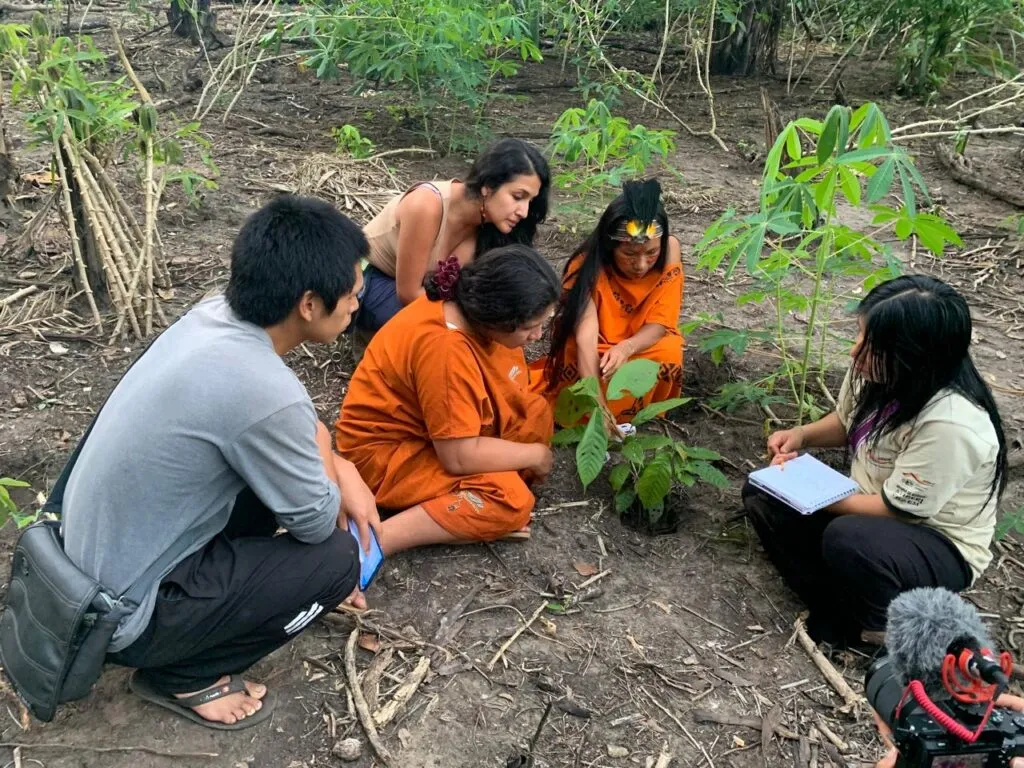
Other days are spent doing community work: training, capacity building, workshops, meetings. These aren’t traditional meetings in a room, but rather out in the jungle visiting people where they live.
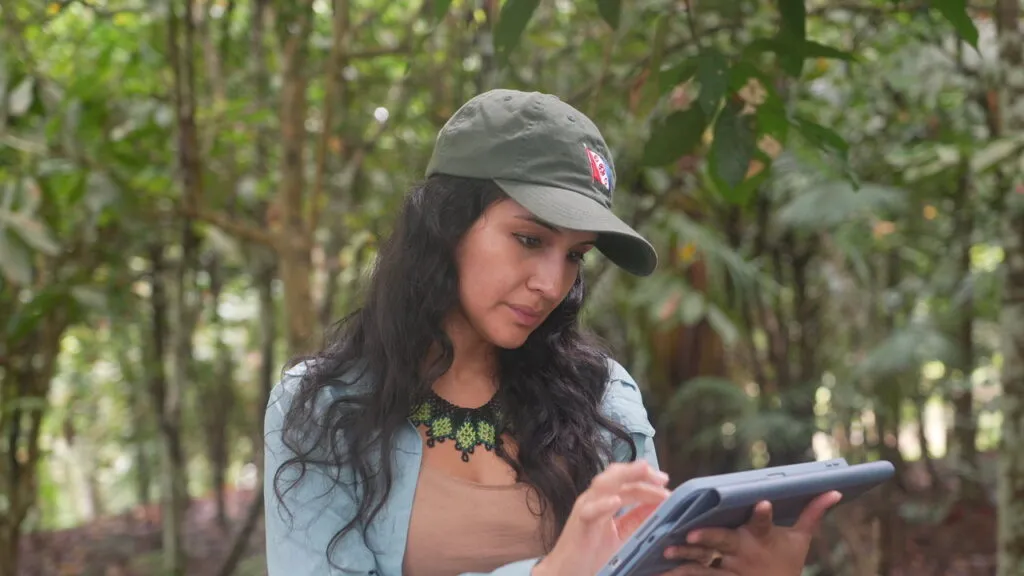
We also have days fully dedicated to advancing our scientific work, whether that’s trekking to find bees, documenting medicinal plants or installing camera traps.
In your book, The Spirit of the Rainforest, you explore the relationship between Indigenous knowledge and modern science. Can you tell us more about this?
They are different ways of knowing. I don’t believe they need to compete, because they use different approaches to explore similar things.
In modern science, you have lots of analytical techniques, quantifiable measures and machinery. In traditional knowledge, you don’t. Instead, there are lots of oral traditions, kept alive through language, dance and song, all of which derive from a close association with nature. If we can look beyond these different languages and find ways for the two to work together, we can achieve so much more.
In Peru, traditional knowledge has always been dismissed as something without real scientific validity, which I find frustrating. In other countries, it’s different. During an internship experience in China, I saw how they incorporate traditional medicine into their healthcare system. Hospitals have traditional recipes and ingredients available in a pharmacy-style building, supported by extensive research into traditional medicine. That is not something that happens yet in Peru.
You have spent a long time now studying the Amazon’s stingless bees and their medicinal honey. How did this first begin and can you tell us about some of your most exciting discoveries along the way?
It began during the pandemic, when stingless bee honey was being used as one of the main ingredients to treat the symptoms of the infection. Originally, it started as just a short academic collaboration to look at the chemistry of the honey – but then we fell in love with the bees, and we’ve been working with them ever since.
Our team was the first to establish scientific evidence of a link between deforestation and bee decline. It was specifically for stingless bees in Peru, and it was only done at a small scale, but it was enough for us to use it as evidence. People already knew this was happening, but with no data to back it up, it was difficult to make the argument.
Our team was also behind the first chemical analysis of the honey, which allowed us to get a scientific snapshot of all of the medicinal properties it has. This research has helped drive entire bioeconomies built around stingless bee honey, both in Peru and across South America.
Our greatest win was securing legal rights for stingless bees, which became the first insect in the world to get this protection. I dare say this has propelled a whole global movement towards protecting ecosystems through bees.
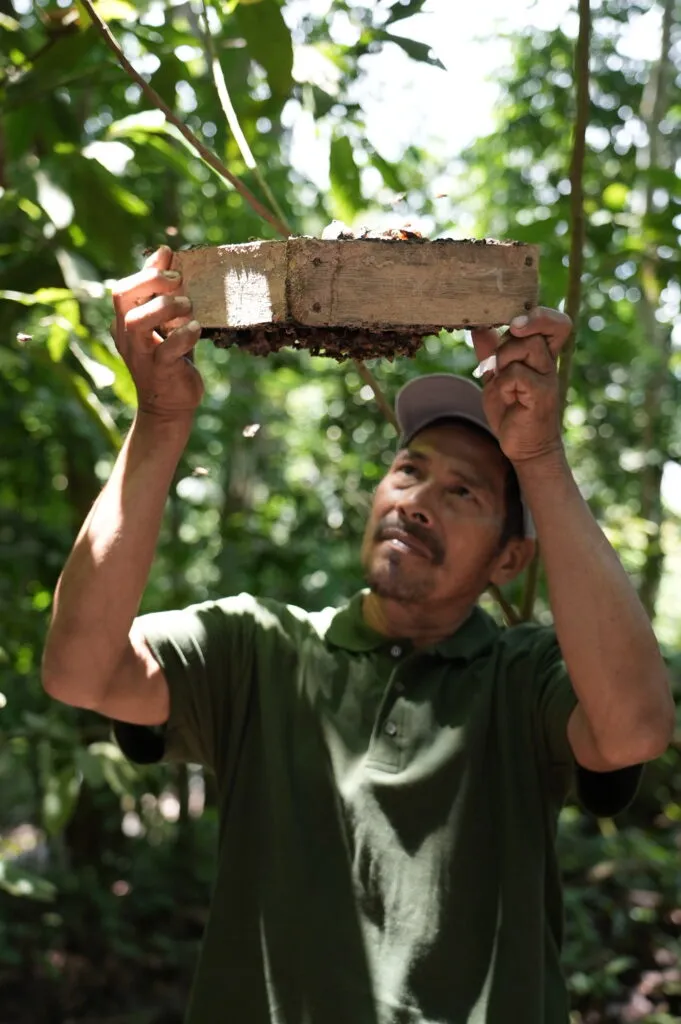
Your research has taken you to some incredibly remote parts of the Amazon. Are there any experiences or encounters that really stand out in your memory personally?
Seeing pink dolphins in Loreto, in the northern Peruvian Amazon. Watching them early in the morning, swimming together as a family, feels like something from a movie. It’s beautiful. The aquatic life in this part of the Amazon is fascinating. We also have the paiche, a giant freshwater fish.
In the central Amazon, in the jungles of Junín and Cusco, we haven’t seen a lot of these animals with our own eyes, but we have seen them through camera traps and found evidence of them in the forest. We’ve discovered jaguar footprints really close to where we’re staying, as well as signs of tapirs and giant armadillo burrows. It’s proof that in areas that are protected, wildlife is still thriving.
Through your work, you have spent a lot of time with indigenous communities across the Amazon. Can you tell us about the challenges that they’re facing today?
Right now, the most immediate challenge is wildfires. Luckily, they’ve recently calmed down, but there have just been several weeks of uncontrollable fires across many parts of the Amazon.
A lot of this is linked to climate change and El Niño. The soil is so dry that fires quickly get out of control. People no longer know how to control fires or do traditional controlled burns as Indigenous people used to. It also comes from people invading land to try to expand illegal activities, without permission of the Indigenous communities.
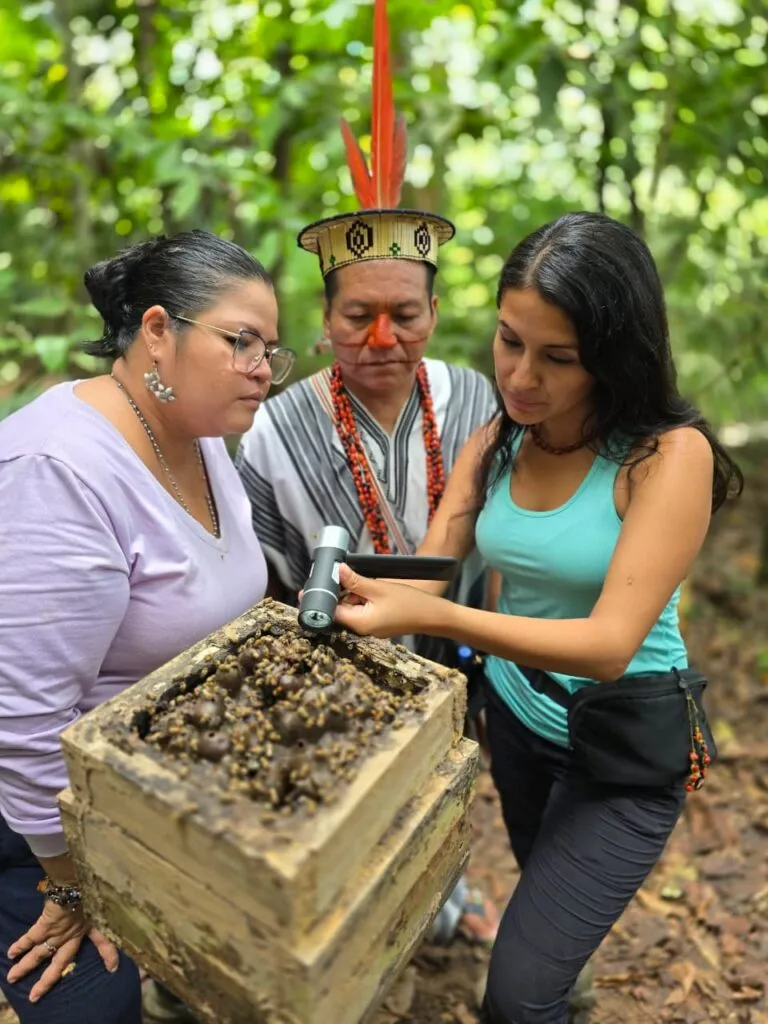
Tourism can be used as a force for good, but it also brings its own challenges. What role do you think that responsible tourism can play in supporting the rainforest and the people who call it home?
Responsible tourism is so important. Part of the support we give to communities is training them to develop multiple ways of making an income. Ultimately, we’re talking about people with basic needs – food and sending their kids to school. If they can find ways to generate an income while keeping the forest alive and thriving, then they will keep doing that – so tourism can be a great ally against the expansion of destructive activities like deforestation, logging, and mining.
In a way, it also brings communities together, helping them to remember some of their traditions in order to share them, and encouraging conversation.
You have a friend who is visiting Peru for the first time and you want to show them the country through your eyes. Where are you taking them?
If they had all the time in the world, then I would take them to all the different parts of the Amazon: Loreto, to see the pink dolphins of the Northern Amazon; Junín and the Asháninka territory in the Central Amazon; Madre de Dios and Cusco’s jungle in the Southern Amazon.
Of course, I’d also take them to the mountains of Cusco and Arequipa. The coast of Peru is beautiful too. I love the northern beaches around Piura and Tumbes, and the Nazca Lines are incredible. You can have the full experience in Peru – jungle, mountains, ocean.
What’s next for you – any projects, expeditions, or other plans on the horizon?
We have quite a lot happening! I’m personally working on a second book. The Spirit of the Rainforest is also coming out in Spanish in a few weeks, which I’m very excited about.
We’re also expanding our work with stingless bees and medicinal plants with Indigenous communities. I can’t share too much yet, but one of our projects involves reforestation through medicinal gardens. We’re creating them and documenting knowledge with Indigenous youth and leaders.
We’re also launching an initiative for people to become honorary adopters of a stingless beehive, helping to protect bees, either in a box or in a tree. They’ll get updates and photos, and can also gift them to other people, like adopt-a-tree programs.
CONTACT US
Private, tailor-made journeys to Latin America and Antarctica, designed by specialists.

Conde Nast Traveler Specialists every year since 2017