
HOW TO PLAN A TRIP TO THE GALAPAGOS ISLANDS
The Galapagos Islands feel untethered from the modern world – a remote volcanic archipelago where giant tortoises roam the highlands and blue-footed boobies carry out elaborate courtship displays.
Centuries of isolation have produced species found nowhere else on Earth, and each island has its own distinct character and wildlife. But with such remoteness comes the need for careful planning; distances are vast, conservation rules are strict, and the experience can vary enormously depending on how you choose to travel.
Here, our specialists help you make sense of those decisions, from choosing the right yacht, catamaran or land-based stay, to understanding when and where to travel.
When is the best time to visit the Galapagos?
If you’re considering when to go to the Galapagos, there is no “best” time to go. However, the two quite distinct seasons may steer your decision, depending on what you love to do.
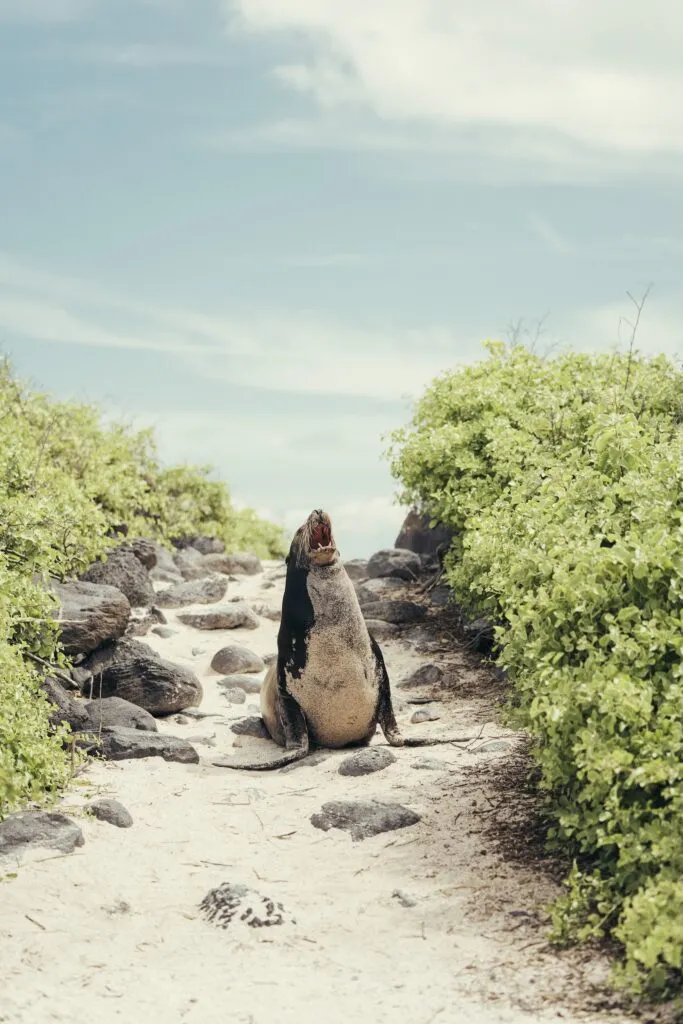
The islands are located on the Equator, so temperatures don’t vary much during the year. The dry season, from June to December, means slightly cooler temperatures and choppier seas that are rich in plankton, thanks to the Humboldt current. This makes it a great time for hiking and seeing land mammals, like giant tortoises and nesting seabirds. It’s also when sea lion pups are born, and the mating season of the blue-footed booby. If you’re here for bird-spotting, the majority of species live here year round, with the waved albatross being one of the few migratory exceptions, and best seen between April and December.
The warmer season is January to May, when the water is calm, the temperature averages 30C and the underwater visibility is at its best for snorkelling and scuba diving, spotting sea turtles and manta rays. The school holidays are peak season, and special family departures run on some boats during the summer weeks off.
Should I stay on land or boat when I go to the Galapagos?
When you plan a trip to the Galapagos, you have three main options on where to stay – land, boat or a combination of both. Land is great for those who are keen to see wildlife but don’t have the sea legs for longer stints at sea. There’s some really special accommodation, from safari tents to eco-lodges; from here, you’ll day trip to the islands, but that does mean you will see less of them once there. If you are travelling with young kids, staying on land will be more comfortable, with a pace that encourages gentler exploration.
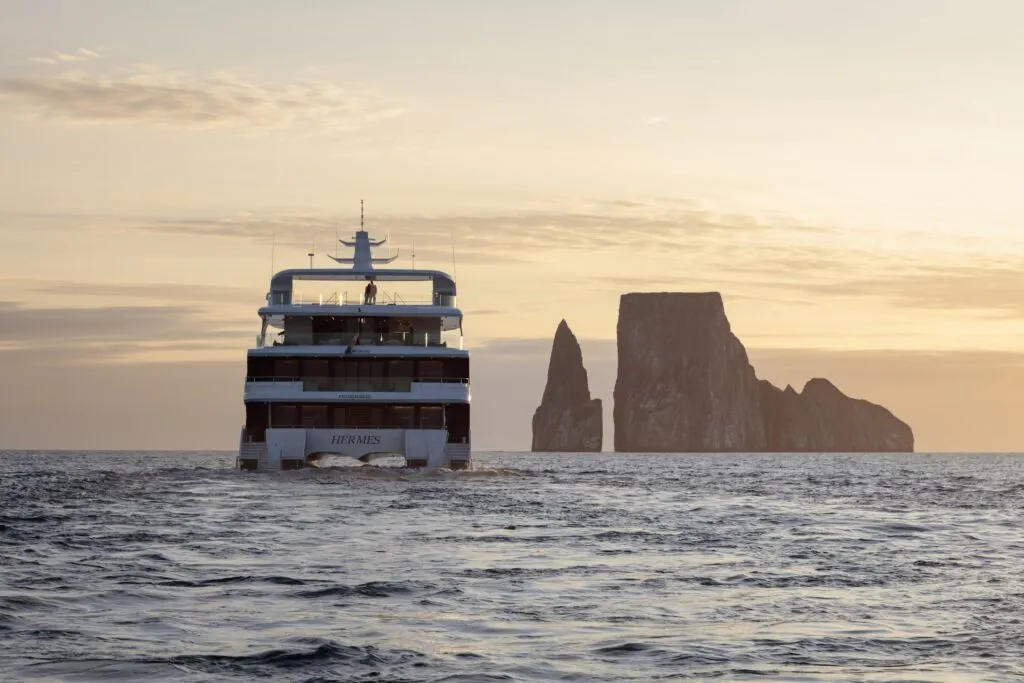
To really uncover the corners of the archipelago, you’re best off island-hopping by boat. We tend to recommend smaller expedition cruises over bigger ships – it means you’ll have a personalised experience, with flexibility. Match the boat to your travel style – do you want an ultra-luxurious experience on board, or are you more interested in where the boat can access, and the length of the trip?
How long to spend in the Galapagos: our suggestions
How long to spend in the Galapagos depends on your appetite for exploring, the pace you generally like to travel at and – most crucially – how long you have. Cruises can be as short as three to four days and go up to 14 days, seeing a different landscape and dropping anchor at a different landing site every day.
We usually recommend eight days: you’ll see an extraordinary amount of wildlife in this time, and it’s enough time to get into the rhythm of travelling on the water, in tune with how each day unfolds. If you don’t love the water, or you don’t like lots of scheduled activities, then choose a five or six-day cruise. We wouldn’t recommend anything shorter than this, as the first and last days are mostly travel.
How to plan a trip to the Galapagos: how do the itineraries work?
The islands aren’t somewhere where you can arrive unprepared and hoping for the best: many people don’t realise that different itineraries are designed and set by the National Park, and the boat you choose and dates you travel is what decides where you visit and for how long. This is an important practice: it limits the number of boats and people on each side of the islands and avoids damage to the islands. Certain sites allow 120 people maximum, meaning most islands are rarely busy. The inhabited islands are busier, but don’t feel overcrowded.
Itineraries will generally take you to either the western side or the eastern and central side. Both are special, but if there’s something very specific you’d like to see, then choose a boat (and route) that fits with that. The western side is one of the most pristine parts of the Galapagos, with otherworldly lava fields and volcanic terrain. These islands – which include Fernandina and Isabela (home to the second biggest crater in the world) – are further away, and therefore seen less. If flightless cormorants, huge marine iguanas and colonies of Galapagos penguins are on your watch list, then this is where to head.
The central and eastern islands are also special – we love Espanola for its dramatic landscapes of large boulders, and North Seymour for hammerhead shark spotting. Bartolomé is the island you most often see in brochures, with its moon-esque landscapes and pinnacle rock (both can be visited on a day trip).

What does a typical day look like on a Galapagos boat cruise?
You’ll see the term ‘Galapagos cruise’ when you plan a trip to the Galapagos. This doesn’t mean big cruise ships; boats here have a maximum capacity of 100 passengers, and many carry far fewer. We prefer small expedition yachts and catamarans with no more than 20 passengers, where you can reap the benefits of a more personalised service, and a lower guest-to-guide ratio.
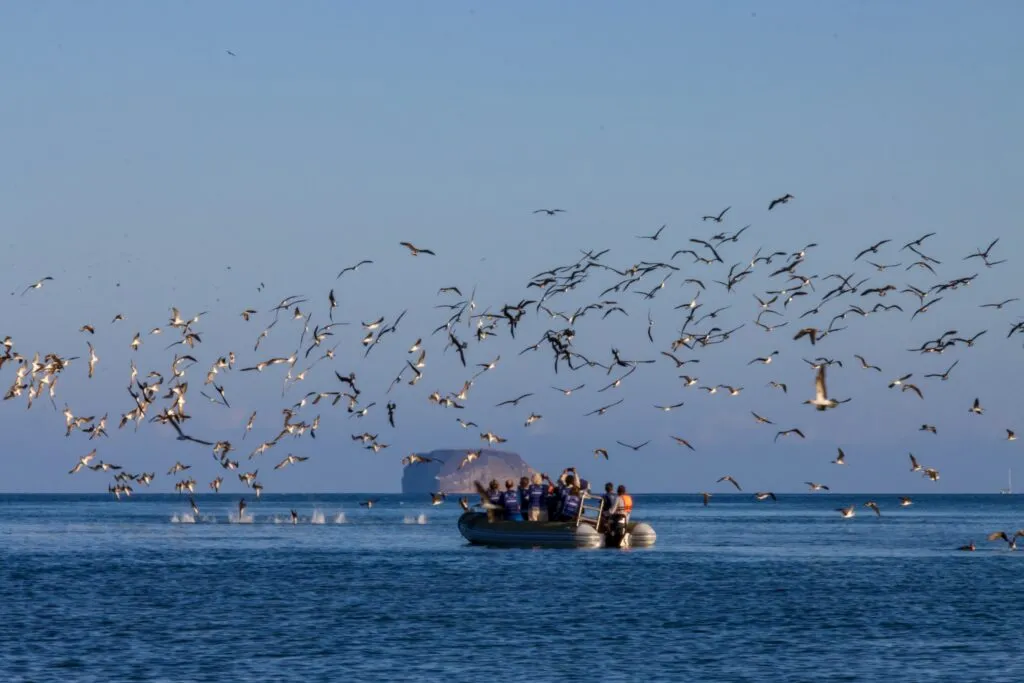
Early starts make the most of cooler mornings; after breakfast on board, you’ll disembark by zodiac (a sturdy rubber boat designed for these types of expeditions). Days are constructed around shore landings – either wet landings (where you’ll hop out straight onto the beach), or dry landings, where you’ll be landing on a rock shore or stage. You’re likely to leave the boat twice a day, and be accompanied by a naturalist guide who’ll pepper your visit with facts.
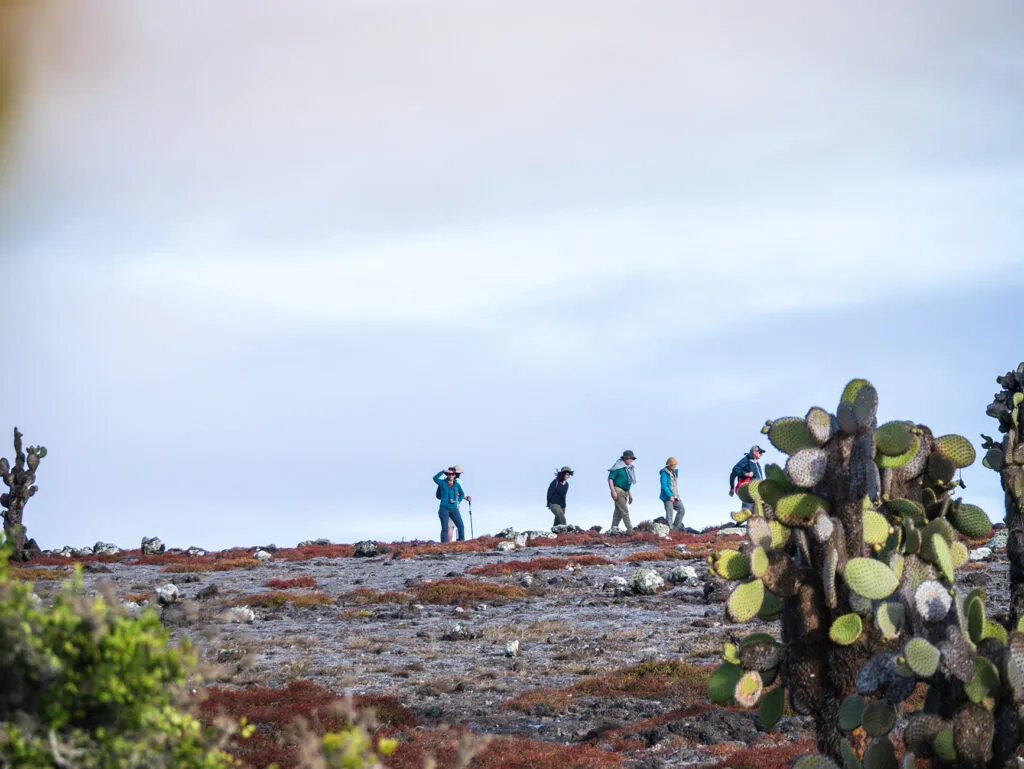
You’re likely to return to the ship mid-late morning for lunch, followed by some relaxation time ahead of the afternoon’s activities. This could be anything from swimming with Galapagos penguins, getting up close to hundreds of marine iguanas sunbathing on black lava rock, exploring volcanic remnants and rare plant life, hiking into the rugged highlands where giant tortoises roam free and paddling at untouched beaches. A pre-supper evening briefing will run through following day’s plans, with a short talk from your guide on the islands’ flora and fauna.
What kind of wildlife will I see when I go to the Galapagos?
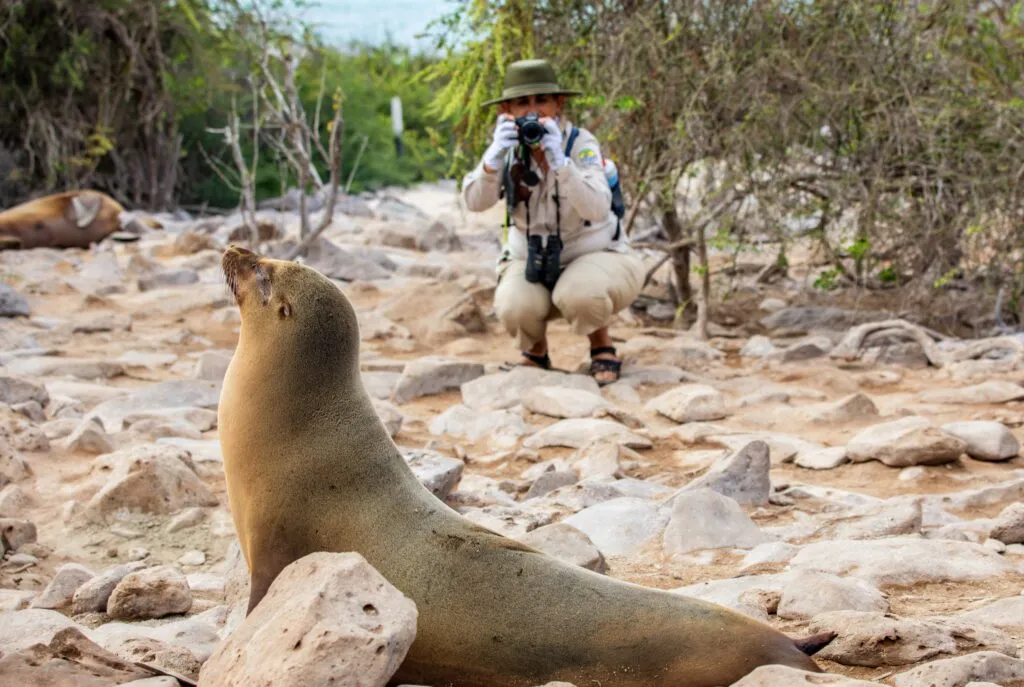
The sheer diversity of wildlife is what makes these islands so unique. The Galapagos has more endemic species than any other place on Earth, and a naturalist guide will be by your side to tell you everything about them.
Depending on where you head, you’re likely to see hammerhead, blacktip, whitetip reef and whale sharks, and we always recommend taking the chance to swim with penguins, sea lions and turtles. The islands are also a birder’s paradise, with blue-footed boobies, frigate birds, flightless cormorants, flamingos and Galapagos hawks, to name a few. There are both land and marine iguanas; the marine iguana being the only lizard in the world with the ability to live at sea. On several islands, giant tortoises roam free through grassy greenlands. Amongst all of these sightings, conservation rules are important to respect: staying a respectful distance from wildlife and knowing that as humans we are there to see, never touch.
Some wildlife can only be seen on certain islands, or at specific times of year; if there are any species you are particularly passionate about seeing, we can advise on the best month and itinerary.
How to get to the Galapagos: what are the countries to consider?
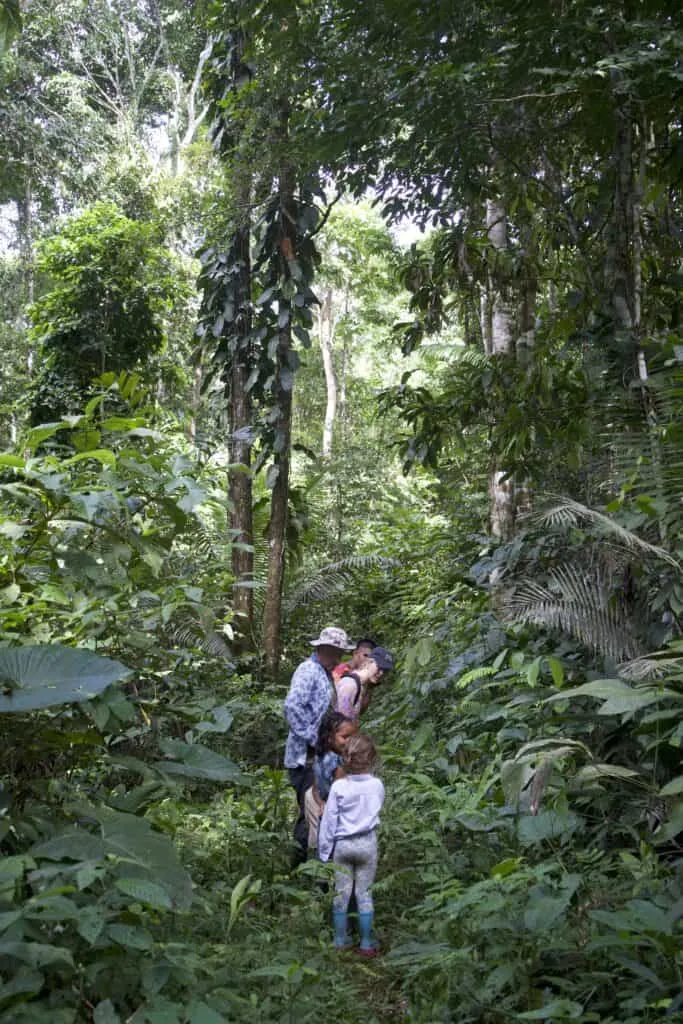
Ecuador’s mainland is a natural fit for pairing with the Galapagos; it’s your gateway to the islands, with most flights taking off from here. You could begin your adventure taking in colonial architecture in the capital, Quito. From here, it’s a 2.5hr flight to Santa Cruz island. After your cruise, you’ll need to fly back to the mainland, giving you time to discover the more rural parts of the country, like Otavalo, famed for its crafts and textiles. We also love Hacienda La Danesa, a family-owned cacao farm bordered by the Andes Mountains. Explore woodlands by horseback or mountain bike, become a beekeeper for the day, or learn to make your own dulce de leche and chocolate – before long evenings of bonfires and star gazing. Bird lovers might be tempted by the Ecuadorian cloud forest: the lush landscape covers the slopes of the Andes and is home to 550 bird species.
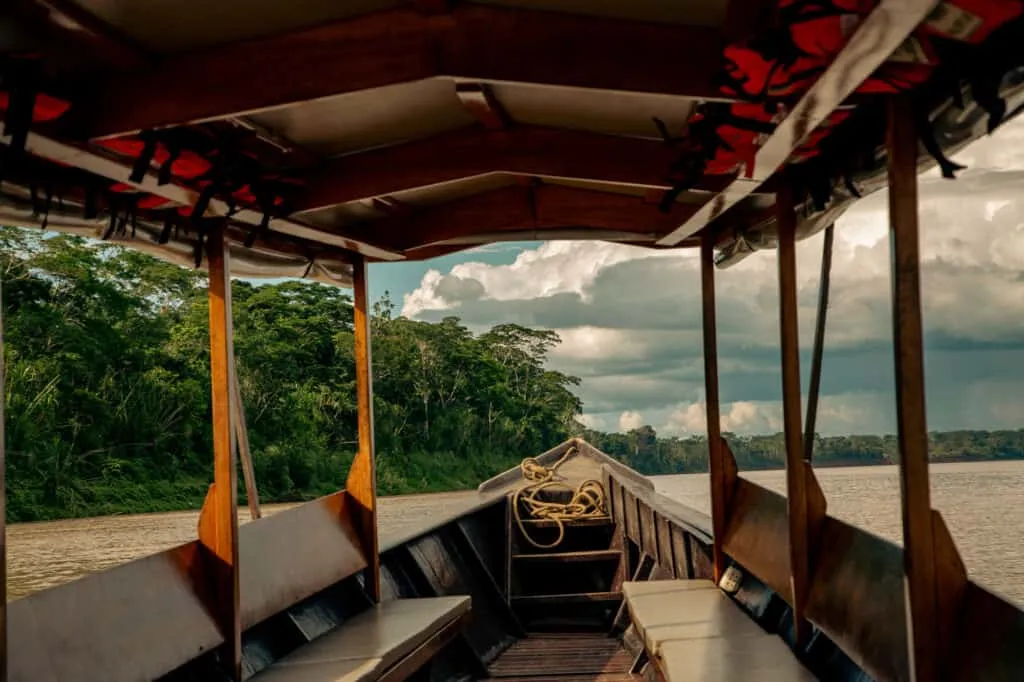
Another great partner is Peru, home to Machu Picchu and the Sacred Valley, the waterways and wildlife of the Peruvian Amazon and Arequipa, a UNESCO World Heritage Site. From here, you can take a trip to the Colca Canyon, one of the world’s deepest canyons and home to wild condors. For an even more memorable trip, make your trip a trio of Ecuador, the Galapagos and Peru.
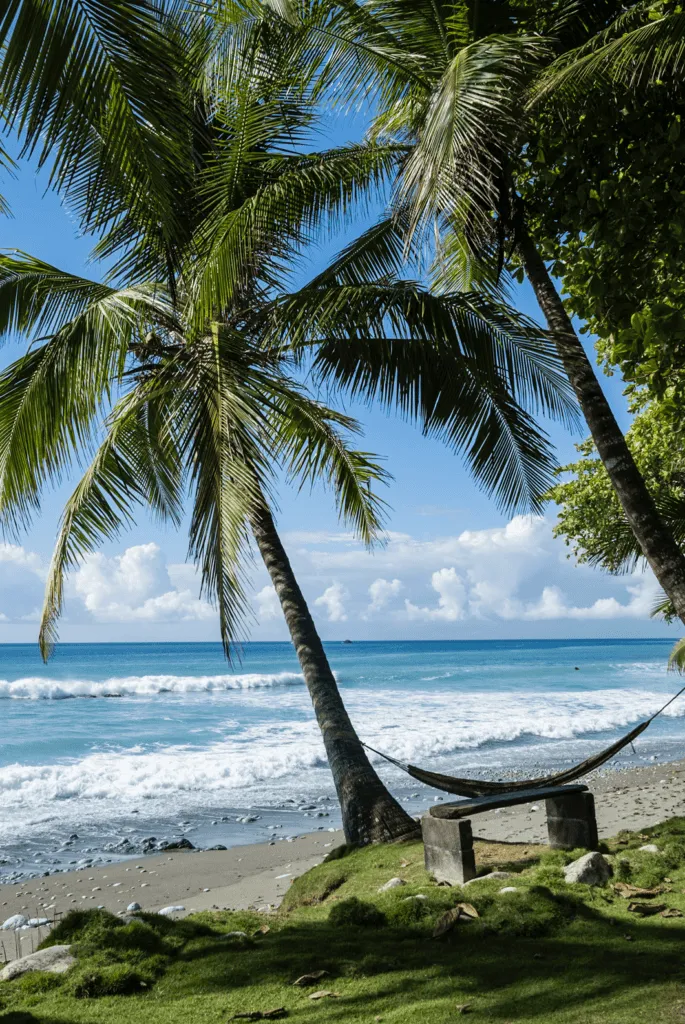
Colombia is also one to consider in plans on how to get to the Galapagos. Sip rum or learn to salsa in the searing heat of Cartagena, relax on jungle-fringed beaches and relish the quiet of the coffee region.
What should I pack as I plan a trip to the Galapagos?
This isn’t glamorous cruisewear territory. The best clothes are functional and comfortable. Of course, if you prefer to be smarter in the evenings, do be.
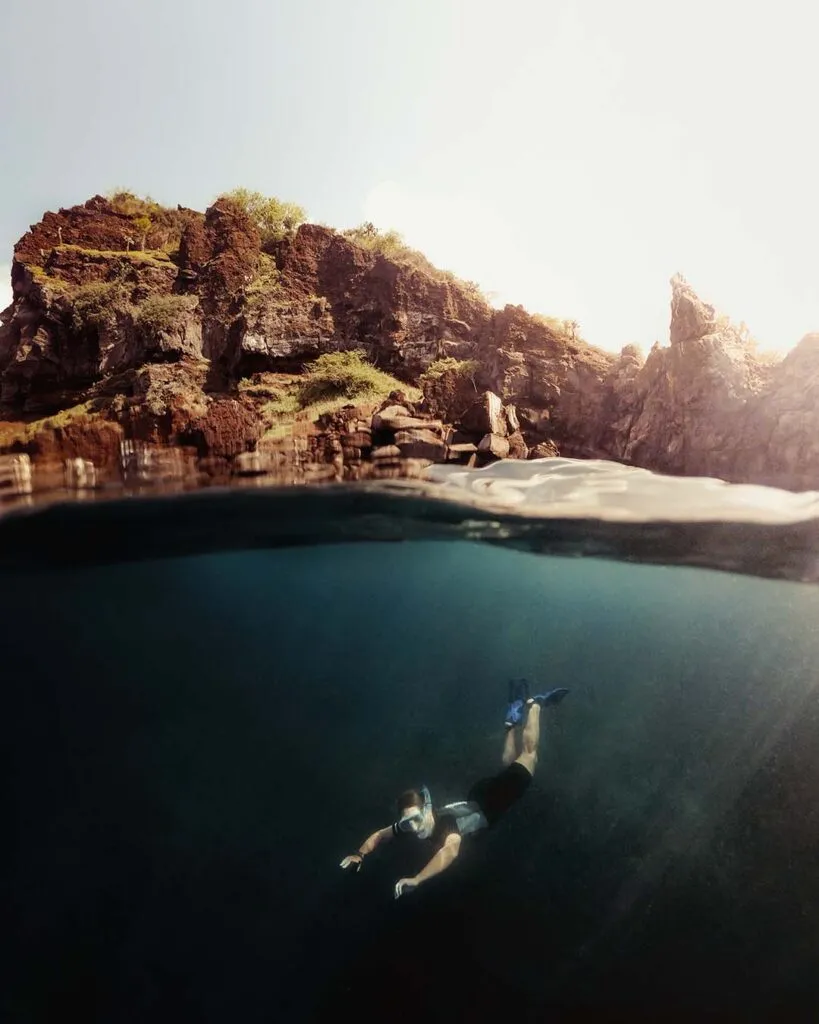
Think about the activities you’ll be doing – a compact light rain jacket, with layers to go underneath, is handy, and a rash guard is essential given the amount of time you’ll be spending in the water (you may also want an underwater camera or GoPro for this). Don’t forget a wide-brimmed sunhat, sunglasses, plus seasickness tablets, just in case. The most important thing is reef-safe suncream, which uses mineral-based filters instead of reef-bleaching chemicals like Octinoxate and Oxybenzone.
How far ahead should I book when I plan a trip to the Galapagos?
The Galapagos Islands are at high occupancy, and the most sought-after boats and cabins book up quickly. During school holidays, we recommend booking at least a year in advance to have the best chance of securing the boat, route, and dates that you want. Over the festive period, some boats start filling up as early as two years ahead.
Outside of peak dates, there’s a little less urgency; two to three months is usually enough if you’re flexible in terms of boat and itinerary. However, if you have strong preferences, it’s always best to plan sooner rather than later.
—
The best Galapagos journeys are rarely one-size-fits-all. Travel here is about finding the right balance between your interests, your preferred style of travel, and the time you have available. Our specialists know the archipelago in detail and can help cut through the noise: refining the options, recommending the most appropriate itineraries, and designing a journey that feels right for you.
CONTACT US
Speak to our specialists to begin planning your Galapagos adventure.

Conde Nast Traveler Specialists every year since 2017