

THE ULTIMATE GUIDE TO GALAPAGOS FAMILY TRAVEL
This group of volcanic islands cast adrift in the Pacific Ocean is the backdrop to some of the most transformative family holidays we know.
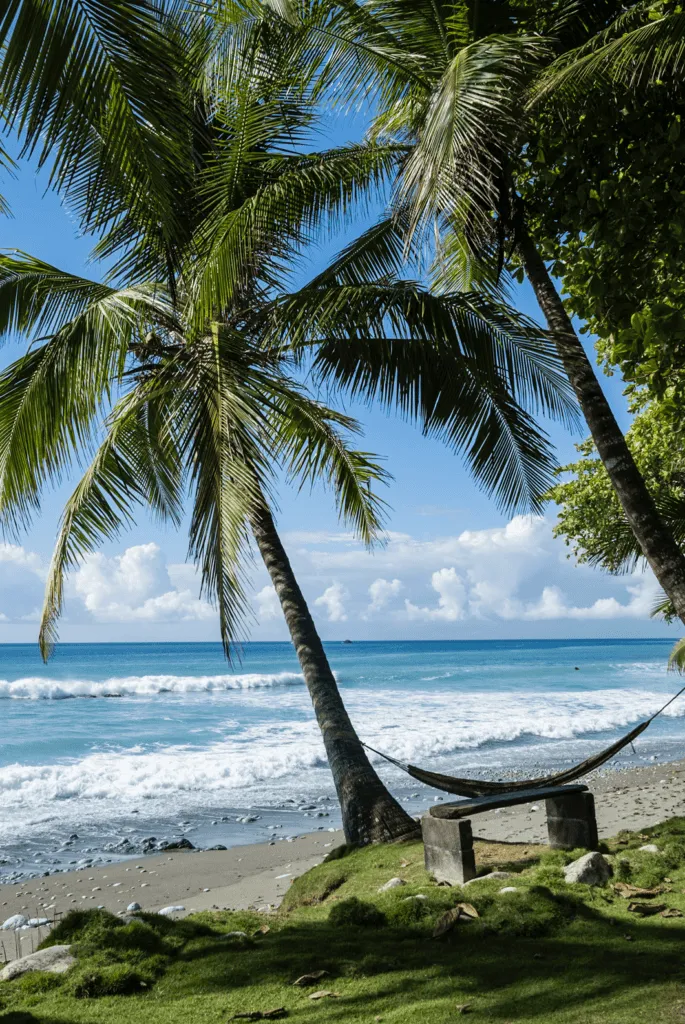
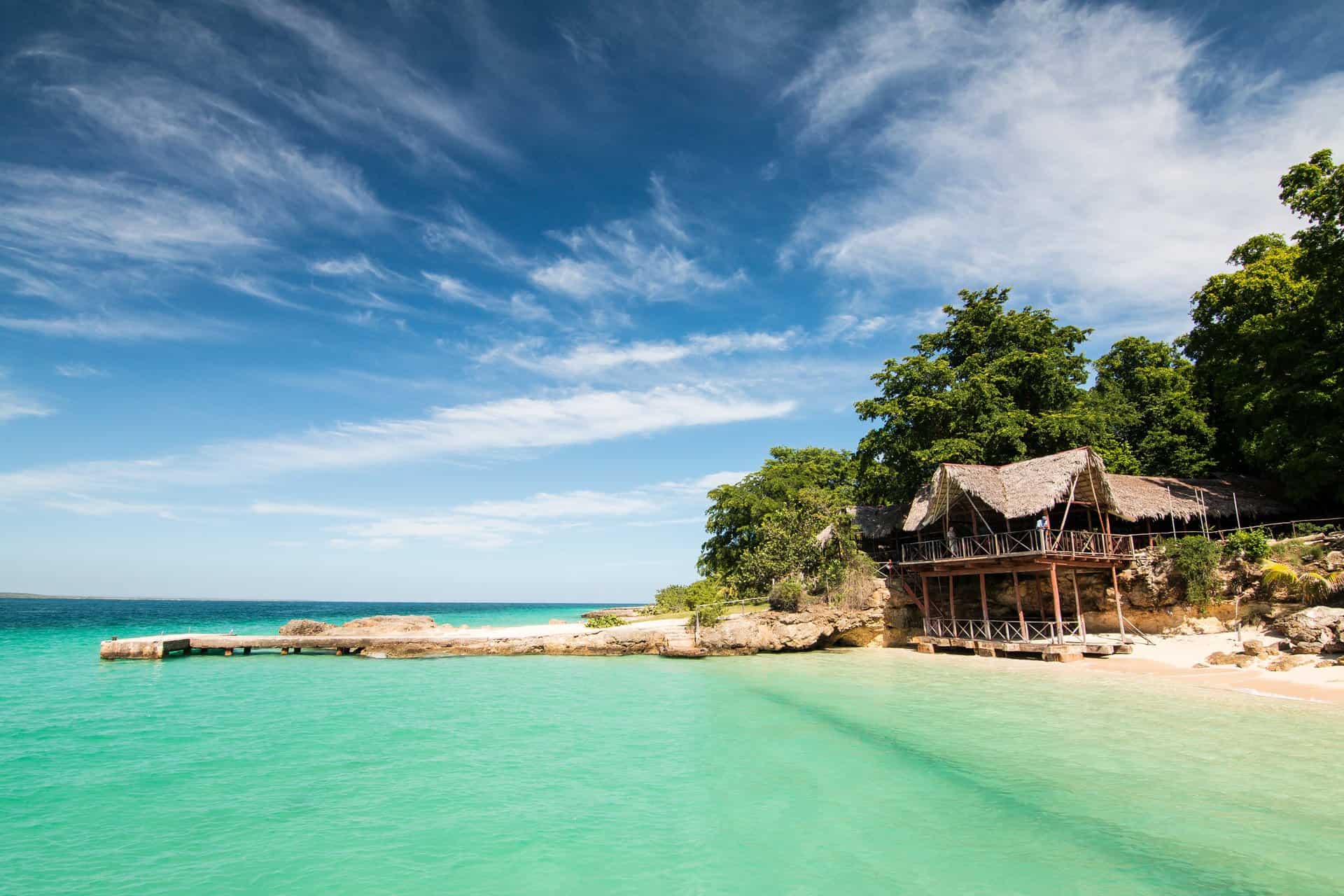
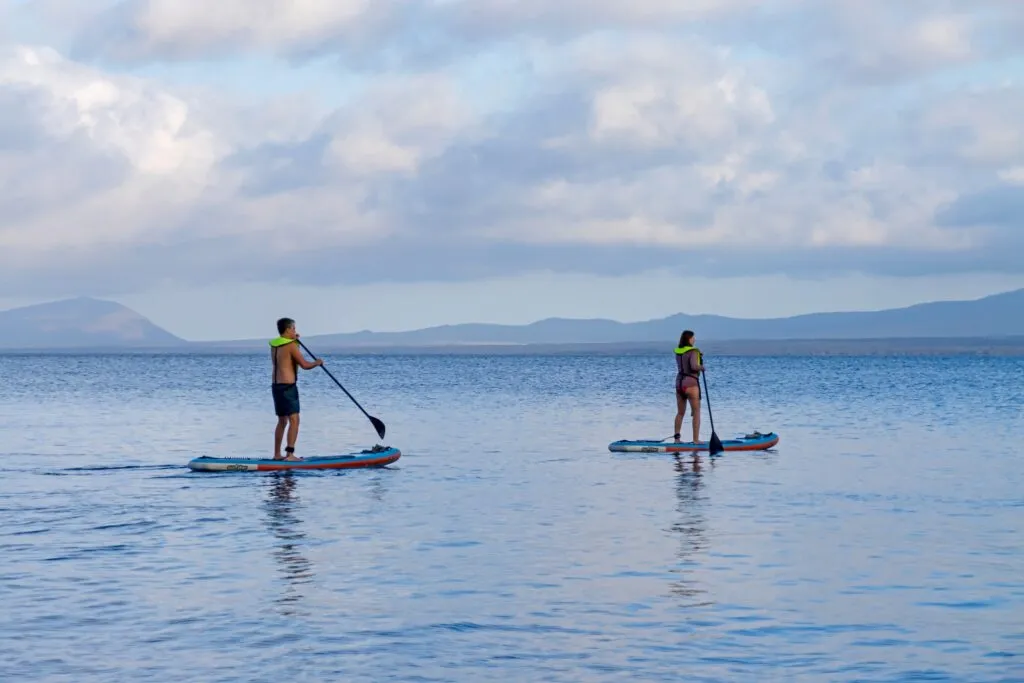
This is a place where children can snorkel in clear waters teeming with turtles and dolphins, spot sea lion pups playing on honey-hued sands, and watch giant tortoises roam through emerald-green grasses. There are active moments too – hiking volcanoes, and whizzing back down. Kayaking across the ocean. Diving beneath its surface.
With the right planning, and our expert help to take care of the logistics, the Galápagos Islands can excite and inspire every family member – even the teens. Here, we share our full debrief on travelling in the Galapagos with children.

Why travel to the Galapagos with kids?
Few trips leave such a lasting impression on children, whose eyes will be out on stalks at the extraordinary wildlife they will see, learning all the while. Days are spent outdoors and disconnected from screens, replaced instead by hikes across volcanic landscapes, afternoons in the water and constant encounters with the natural world.
The Galápagos Islands aren’t a place you simply observe wildlife from afar: animals here are largely unafraid of people, which means encounters often happen at remarkably close range. Sea lions wander up to the shoreline beside you; marine iguanas bask across walking trails; while snorkelling, penguins, sea turtles, marine iguanas, dolphins and even fur seals are all likely to appear in front of your mask.
Travelling here as a family is also more straightforward than many parents expect, particularly if staying aboard an expedition cruise. Excursions, meals and transfers are handled for you, and there’s no need to constantly pack and unpack – leaving more time to simply enjoy being together.
What ages should kids be to travel to the Galapagos Islands?
Generally we recommend waiting until children are six or seven, when they can happily tackle 1-2 hour hikes, snorkel in a life vest, and properly engage with guides. This is also the age that most boats host children from, though some will accommodate under 6s on special family departures or on private charters.
Teens and tweens are also some of our biggest fans of the islands. Travelling here gives them a chance to step away from screens and the pressures of home, immersed in nature and occupied by activities that don’t feel like a chore. Textbooks come to life, and they leave with a new appreciation for the natural world – and, often, for time spent as a family.
Babies, toddlers and pre-schoolers can be trickier to travel here with; unless they’re used to spending time on boats, we’d recommend staying in a private villa or eco-lodge, giving them more space to wander.
How long should families allow for a trip?
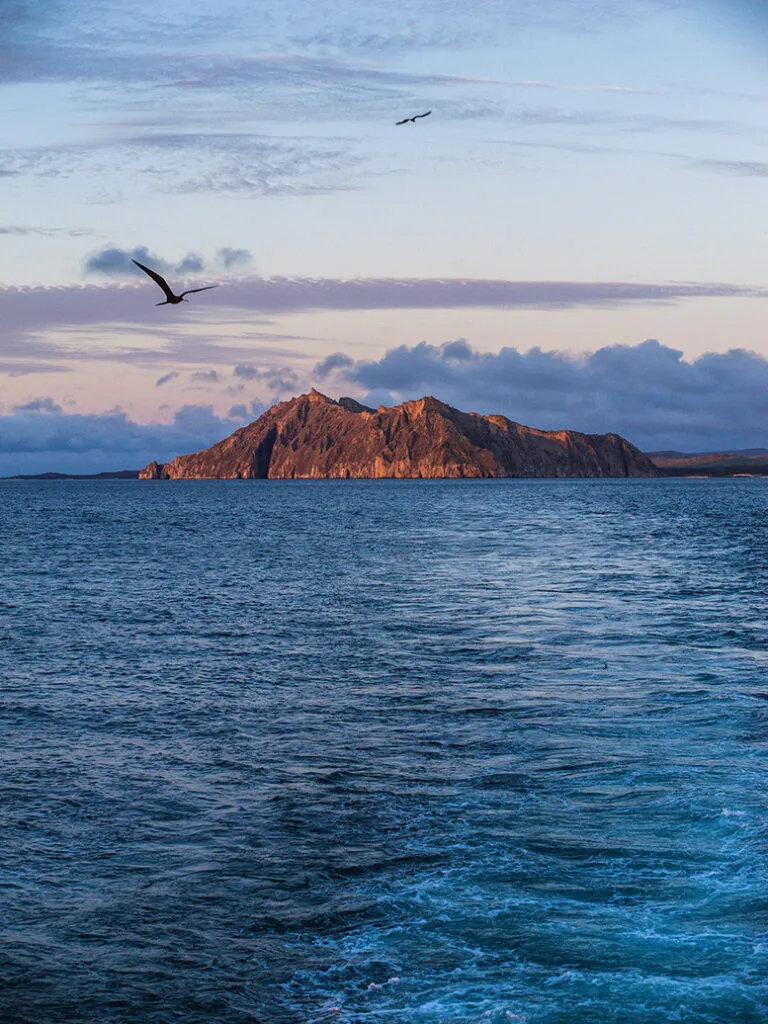
You can take trips as long as a fortnight, but we feel the sweet spot in the Galapagos – especially with children – is seven nights. Enough to give you the full experience, with a happy spread of islands, and plenty of time for taking in different activities, wildlife and habitats. You might choose to spend the entirety of that time on the sea, or combine a shorter cruise with two or three days at a lodge.
If you’re set on a boat, trip departures and durations depend on the boat. Our guide to choosing a Galapagos cruise tells you more. Staying on land gives you more flexibility – with younger kids, you may prefer just enjoying one or two activities in the morning before a relaxed afternoon on the beach.
Either way, getting to the Galapagos takes time, so we recommend taking your time on the islands, slowing it down instead of rushing through it. You’ll likely arrive on an international flight through mainland Ecuador before continuing west into the Pacific, and the first and last days of a Galápagos trip are largely given over to travel between the mainland and the archipelago. The reward is somewhere that feels entirely remote – the archipelago is spread across 45,000 square kilometers of ocean, so it’s no surprise it takes some effort to get there. It’s worth every second.
Where should families stay on a Galapagos trip – on land or at sea?
Small-ship expedition cruises are the classic way to experience the Galapagos, and give access to the remoter islands which are impossible to reach on a day trip. A favourite of ours is Ecoventura’s trio of ships: Origin, Theory and Evolve. These sister vessels host no more than 20 passengers, so the atmosphere feels intimate, and children can quickly get comfortable with their guides and fellow guests. In school holidays, they operate dedicated family departures, with activities tailored specially for younger travellers. We also love La Pinta for families: with 24 cabins and generous social areas, there’s more room for kids to run around than on the smaller ships.
If you’re travelling to the Galapagos with kids, you could also combine a cruise with a stay on land. The Galapagos Safari Camp is a family-run, under-canvas option in the highlands of Santa Cruz. Kids craving playtime will love the kids club that runs in the school holidays and listening to hooting hunting barn owls. For bigger families, we like Montemar Eco Villas – a handful of villas surrounded by giant tortoises feeding on the grass.
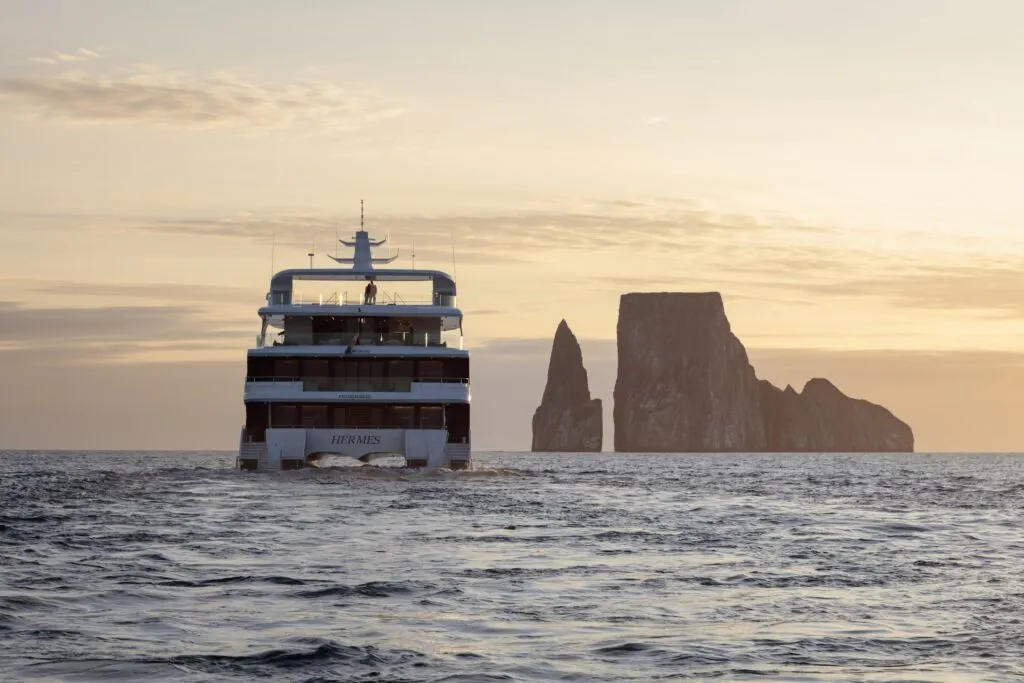
The most flexible option, especially for multi-generational groups, is a private charter. Hermes is a particularly good choice: a spacious catamaran with twelve cabins that allows everyone to spread out. The nature of a private charter means you can set the pace of the trip, with outings and activities designed entirely for your family.

When is the best time to travel to the Galapagos with kids?
There is no bad time of year for a Galapagos family holiday; instead, make your choice based on the age of your children and what you want to see and do.
Generally, there are two seasons to the islands, with a warmer wetter period from December to May, and a cooler drier season from June to November. The warmer months have calmer and clearer water, with brilliant snorkelling and plenty of turtles to spot. The cooler garúa season, named after the mist that rolls in from June, can bring choppier ocean conditions – so keep this in mind if any of your family is prone to seasickness. Any bird spotters in the family may be more keen on April – November, one of the best times to see the waved albatross.
If you’re travelling to the Galapagos with children that are school-age, your most likely windows are over July and August, with some shorter options over Christmas, New Year and Easter. Christmas in the Galapagos is particularly magical; a real step away from tradition, and chance to witness young sea-lion pups on the beach. October is a great time for cooler hiking and more active wildlife – from sea lion pups to Galapagos penguins, and a key time for young divers in the family, with large marine mammals, including whale sharks, more likely to be seen.
How should families prepare before going – what’s on the packing list?
Packing for the Galápagos is generally more casual than many expect, and you’ll likely need fewer clothes than you think. The essentials are practical rather than formal: reef-safe mineral SPF, UV-protective swimwear, a wide-brimmed hat, closed-toe trainers with good grip, and sea shoes.
Most boats provide snorkelling equipment, though keen snorkellers may prefer bringing their own mask and fins. Anti-seasickness tablets or bands can also be useful, particularly for younger children.
Binoculars and torches are always a hit with kids, for daytime bird spotting and nighttime bug-hunting.
Where should families combine with the Galapagos?
To reach the Galapagos Islands, you’re most likely to fly via Ecuador in South America. You may want to pause here to recalibrate the kids’ sleep patterns, but Ecuador is so much more than a transit destination. The capital, Quito, is the perfect contrast to the wildlife rich and ocean-based adventures you’ll have out in the Pacific, an exciting urban mix of museums, playparks and colourful UNESCO-listed old town. Then there’s the countryside close to Otavlo, giving you a chance to revel in more wholesome rural activities such as horseback riding and hiking, with nights spent in cosy haciendas.
The other option is neighbouring Peru, where kids will love riding the railway to Machu Picchu, zip-lining through the Sacred Valley, stocking up on colourful new toys and trinkets in the markets and taking in the sights and sounds of the Amazon on a night walk. Both countries are ripe for adventure if you’re an active family, but if you want to slow the pace, or have grandparents with you, there’s plenty of more leisurely adventures to be had too – plus some beautiful historic homes to stay in.
How far ahead should we book a Galapagos family holiday?
If you’re planning to travel during Christmas, Easter or the summer school holidays, we recommend booking as early as possible – ideally around a year ahead, and sometimes up to two years in advance for the festive period. The most sought-after boats have limited cabins, and availability disappears quickly during peak weeks.
Outside of these times, more last-minute trips are possible; that said, we recommend booking at least three months ahead for the best chance of securing your preferred boat and itinerary.
As with most destinations, travelling outside the school holidays has its advantages. There’s generally more availability across boats, flights, accommodation, so you’re likely to have your first choice in these areas. For families with flexible dates, May and June are particularly good months, as there are fewer visitors to share the sites with, plus reduced demand on boats and accommodation.
Any top tips for parents considering it?
Children who are confident swimmers tend to enjoy the Galapagos far more; if you can, it’s worth making sure they’ve spent plenty of time in the water before you travel.
Building excitement beforehand through books or films also adds to the experience once you arrive. A couple of great books for younger kids are Galapagos George, inspired by the story of Lonesome George, or Island: A Story of the Galápagos, which introduces the islands through geology and evolution.
Learning a little Spanish before the trip can make everyday encounters more fun and engaging. Even a few basic phrases picked up through school or online classes can help them feel more connected to the experience once they’re in the Galapagos.
Through programmes such as Pack for a Purpose, families can also bring extra educational or art supplies to donate to local communities, including Alejandro Alvear School on San Cristóbal Island – a thoughtful way to get kids involved in giving back.
CONTACT US
Speak to our specialists to begin planning your next family adventure.

Conde Nast Traveler Specialists every year since 2017