

“For true anglers, the quest for the remotest, wildest spot—with the most abundant fish and the fewest boats—is eternal. We just may have found it.”
In March 2025, award-winning travel journalist Jen Murphy travelled to Colombia’s remote Chocó coast with Plan South America to experience one of the continent’s last true wilderness frontiers.
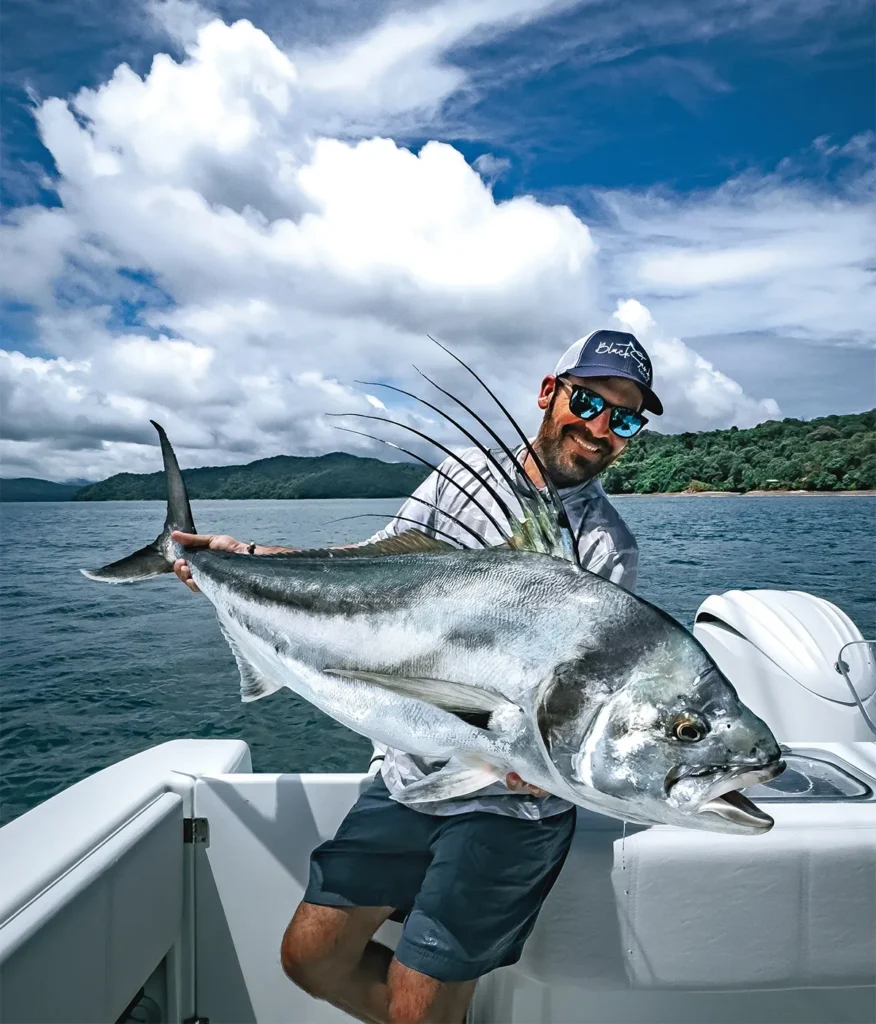
Based at Black Sands Lodge in Bahía Solano, she spent her days fishing the Pacific during the annual sardine run, watching dolphins, whale sharks and seabirds at work, releasing baby turtles, and exploring this region that remains remarkably untouched by tourism.

Words by Jen Murphy – Robb Report
“It’s late March, and I’ve arrived in Bahía Solano, an under-the-radar fishing paradise on Colombia’s wild Pacific coast, just as the sardines have started to pour into the region’s warm waters on their annual spring migration south from Panama. When they cluster into a dense sphere, known as a bait ball, they become a feast for predators such as tuna, sailfish, jacks, and snappers. And as those predators hit the surface to feed, they in turn become enticing targets for anglers like me. This natural phenomenon is only one reason the fishing here is so spectacular.
Another is the lack of tourists. In virtually any other fishing destination, a feeding frenzy like this would attract dozens of boats. Here, with the exception of a local panga, we are the sole vessel in the water. Unlike Colombia’s Caribbean coast and coffee region, the Chocó district in which Bahía Solano lies has yet to be discovered by globe-trotters. Just under a decade ago, this jungle-cloaked area was controlled by the FARC (Revolutionary Armed Forces of Colombia) guerrillas. Even after the 2016 peace accord between the FARC and the Colombian government, only intrepid travelers ventured here, lured by the district’s black-sand beaches and extraordinary biodiversity. (Chocó is roughly the size of New Jersey and Connecticut combined and contains an estimated 9,000 vascular plant species, 2,250 of which are found nowhere else, as well as more palm species than any other part of the world.)”
CONTACT US
Tailor-made trips to Latin America and Antarctica, crafted by specialists.

Conde Nast Traveler Specialists every year since 2017