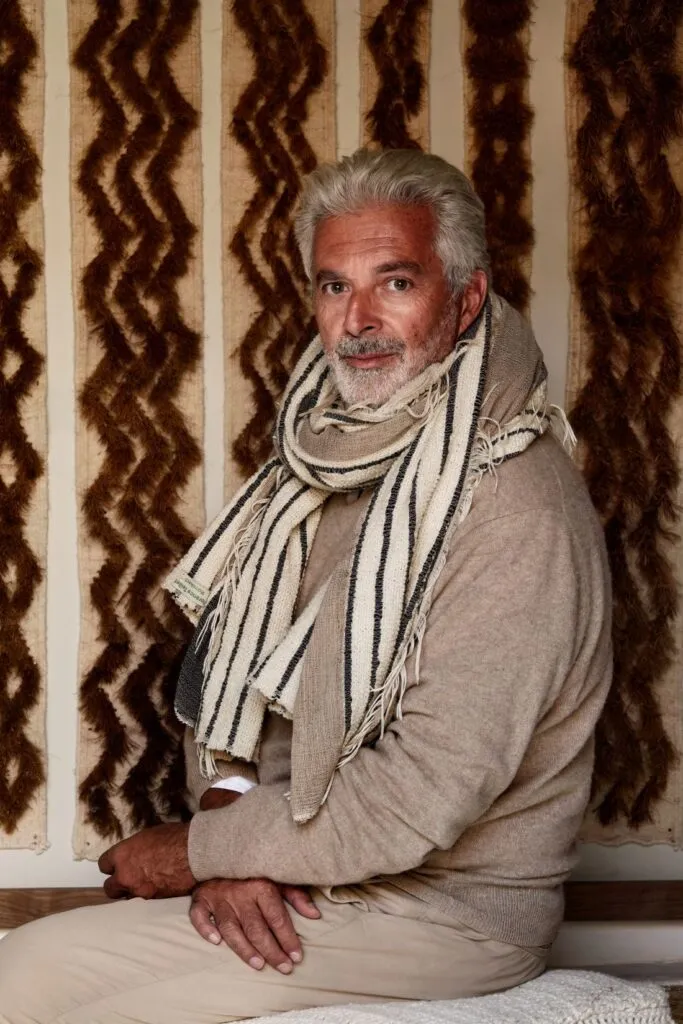

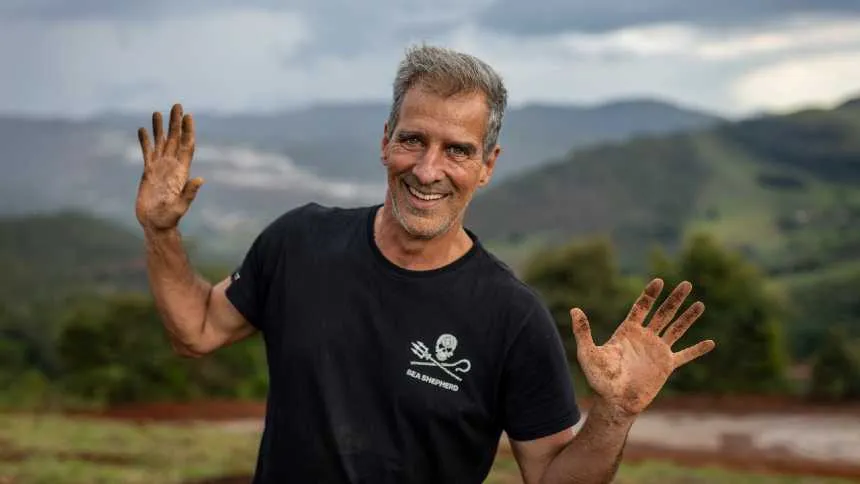
A former industrialist turned environmental visionary, Renato Machado is the force behind Ibiti Project – an ambitious rewilding and social experiment in the hills of Minas Gerais.
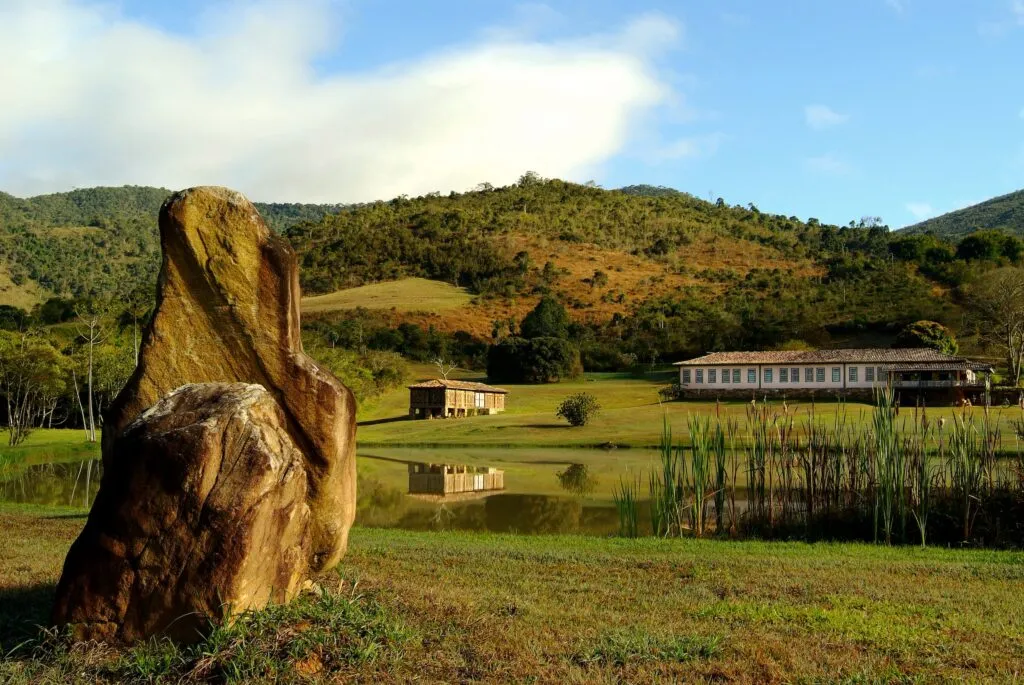
What began more than forty years ago as a few hundred acres of degraded pasture has grown into a 6,000-hectare sanctuary of restored Atlantic Forest, home to tapirs, red macaws and South America’s largest primate, the muriqui.
Built on the belief that environmental recovery cannot exist without social regeneration, Ibiti has become a blueprint for regenerative tourism: a place where people and the natural world thrive side by side, and where art, education and organic farming all form part of the ecosystem.
We spoke to Machado about the philosophy behind the project, his 2000-year vision for the future, and what it means to live in balance with the planet.
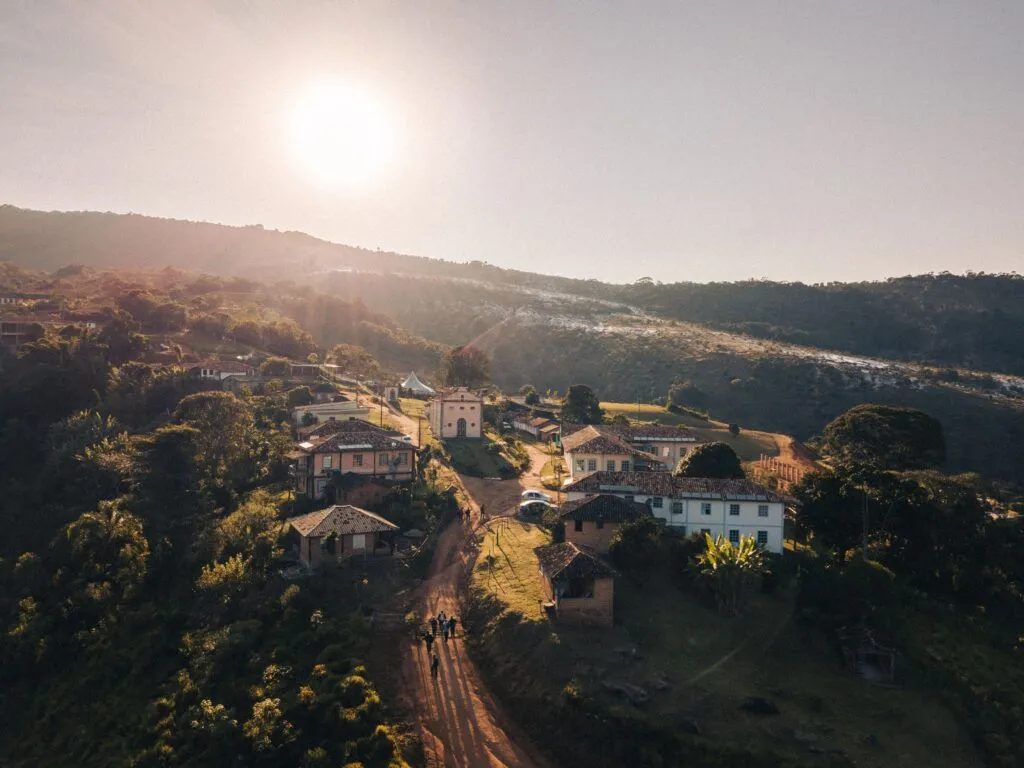
Tell us how Ibiti first came about – what first drew you to Minas Gerais and inspired the project?
A cousin bought the first plot here 43 years ago and invited me to be his partner. Later, I invited a brother, and we started buying more land – all degraded farmland, mostly for rewilding. As time went on, my partners thought I was mad and left me, so I carried on alone.
A few years later, I realised the project had to involve local people. It couldn’t just be environmental; it had to be social too. That’s why we created the first lodge, and then others, to generate jobs and income in this rural part of Brazil.
There’s a term I love, biomimetic, meaning ‘inspired by nature’ – taking inspiration from the natural world to solve human problems. Since the beginning, the project has been entirely biomimetic, and entirely experimental. We try things, and if they work we continue; if not, we let them go.
Can you paint a picture for us of how it has evolved, and what it looks like today?
We started off with 50 hectares; now we have around 6,000 hectares, and more than 300 people. Ninety-six percent of that area is under rewilding, and will be for a long time. Biologists say it will take 2,000 years for the forest to get close to what it was two or three hundred years ago, before mankind destroyed it.
Our accommodations are very simple – many of them are rebuilt village houses – but everything that really matters is great: the showers, the beds, the gastronomy. We produce 273 different kinds of foods here, and everything is organic. The master plan is to have five or six lodges connected by trails – a kind of ‘Camino de Santiago’ through Minas Gerais.
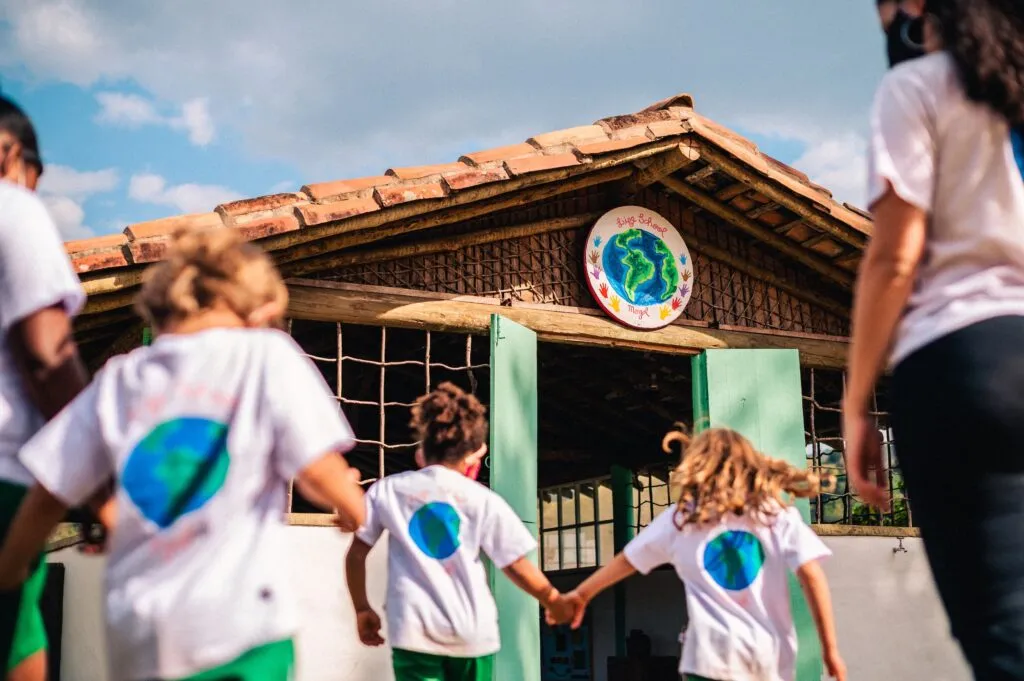
We also run a local school and support reintroduction programmes for animals extinct in the area, including the muriqui (the largest monkey in the Americas), the tapir, the red macaw, and many others.
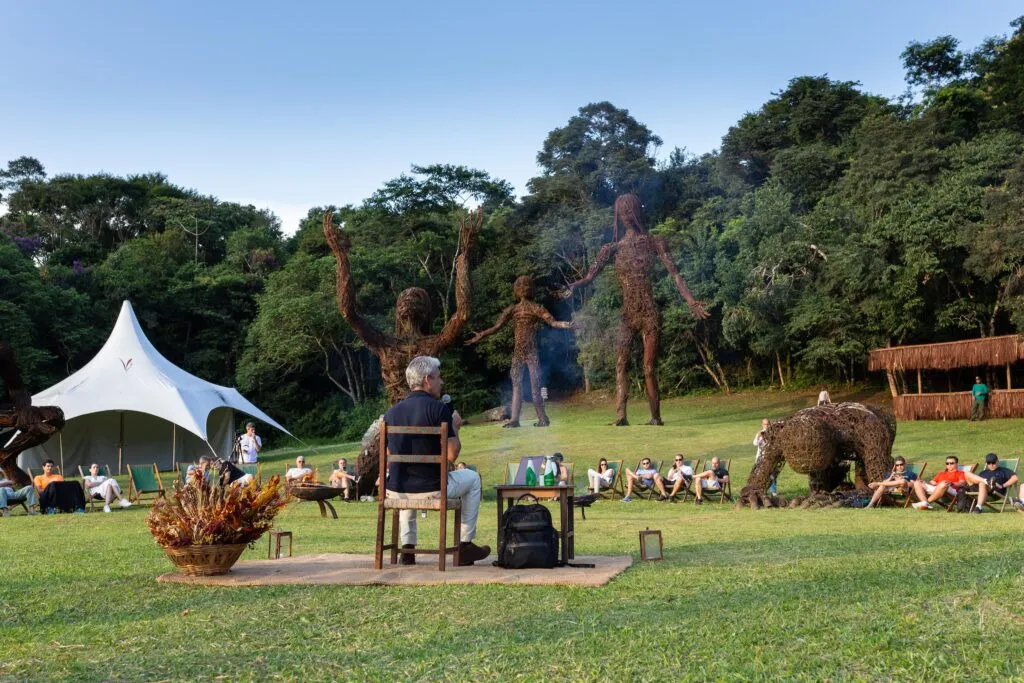
Tell us about your relationship with the local community. How involved are they with Ibiti, and how have they inspired what you do?
The social net we have with the local community is the most important element of Ibiti. In my view, they are the true owners of the project. We don’t own anything – we just take care of it and help them when they need it.
Some staff live within the project, others in Lima Duarte, a little town nearby. All of the kids that live in Ibiti have the opportunity to study in our school, even if their parents don’t work on the project. There are 16 students there at the moment, including my own children.
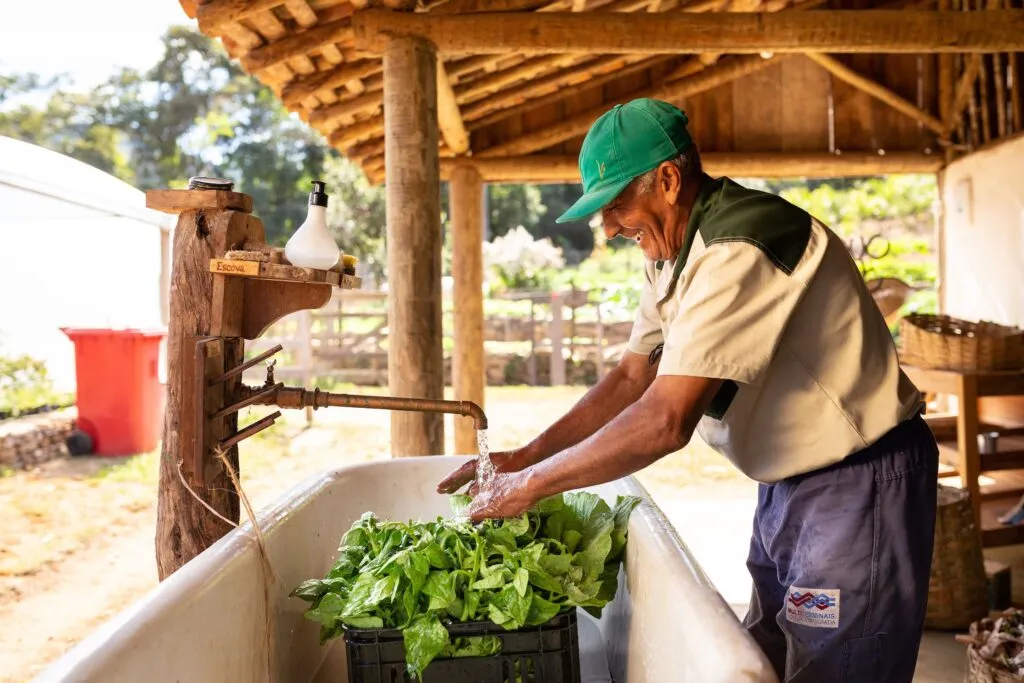
You welcome a wide range of people – families, artists, nature lovers, spiritual seekers. What do you hope they take away from their time at Ibiti?
The most important thing is changing the values and the minds of people that visit us. That, to me, is bigger than anything else we do here.
I read a very interesting environmental book called Regeneration, by Paul Hawken, where he says that environmentalists’ main problem is that they don’t know how to communicate. We can’t focus only on logic, because our species is not rational; we are animals, touched by emotions, and so we have to communicate in a different way. That’s why I have so much art here – and I would include gastronomy in that. Through art, we try to touch people’s hearts, and in doing so, we bring them to our cause.
The whole project is inspired by the sixteenth-century philosopher Spinoza, who used to say that God is in nature: if you cannot see God in nature in the miracle of life and existence, you won’t see Him anywhere.
Tourism often carries a cost to the places it touches. How do you address that at Ibiti?
It is no longer enough for tourism to be sustainable; it has to be regenerative. At Ibiti, by coming here as a tourist – for a few days, or even a weekend – you’re healing the planet. The average Brazilian releases 10 tonnes of carbon dioxide into the atmosphere per year. Here at Ibiti, we remove 60,000 tonnes of carbon dioxide per year, so we neutralise the existence of 6000 people.
It only costs around 200 dollars per person, per year, to do that and heal the planet. It’s not expensive, but the problem is that globally, we don’t value it. An Australian visitor once told me that when Aboriginal people had to make an important decision, they had to consider its impact on the next seven generations. We should do the same thing.
How have your own travels shaped your philosophy?
Bhutan was a real source of inspiration for Ibiti. Before visiting, I first stopped in Kathmandu, Nepal, which was so sad – it’s full of garbage and pollution, because they opened completely for tourists. Bhutan is the opposite: they are very closed to tourists, and they keep their traditions. That’s what we want to do here. For economic reasons, I should build a gated community or a big resort, but I want the opposite, a small lodge – I don’t want to spoil or destroy this place.
I’ve been to communist countries too, and feel freedom is very important, so ours is a libertarian project. Freedom is essential for happiness and for creativity. We need to be inspired, we need creativity, if we are to change the future of our species and of mankind.
You’ve said that progress has made us more destructive, not wiser. How do we start thinking differently about the way we live on this planet?
We are increasing the pace of destruction, and that has to change. In all of human history, the most destructive day for the planet was yesterday. By tonight, today will have been worse, and tomorrow, worse again. Even with all of the renewable energy that we are producing from wind turbines and solar panels, we aren’t meeting rising demand, so coal energy production keeps increasing. AI and Bitcoin are only adding to the problem.
Here at Ibiti, we have a 150-year old piano, an 82-year-old airplane still in good shape, and a 1954 Land Rover Series I that we’ve electrified and still use. These prove that in the past we knew how to build sustainable things. Now, it’s all programmed obsolescence.
I don’t trust governments – if we wait for the government to change things then we’ll have to move to Mars. Change has to come from individuals.
We need to think not just out of the box, but so far outside it, if we want to keep existing on this wonderful planet. I believe we’re the most interesting species to have ever existed. Dinosaurs lived for 150 million years and never wrote a poem. We’ve been here only 200,000 years – practically newborns – and we’ve already created music, airplanes, poetry. We may be alone in the universe. If so, we should treat this planet, and our privilege in being here, far better.
What’s next for Ibiti Project?
I still lose a lot of money here. In the future, I want Ibiti to be profitable, but in a different way. I don’t want to make the same mistakes we’ve been making on the rest of the planet.
My idea is for local people to be included as owners. We’ll probably tokenise the project so that any worker can save up and buy tokens representing part of the land they work on. I’d like to donate a portion of the project to the employees – because they deserve it – then sell the rest to travellers and clients. The proceeds would help us transform this little town where I live into the Davos of planetary regeneration.
Ibiti is, above all, an experiment. We are here to inspire, but more than that, to be inspired. Our challenge is to exist on this small piece of the planet’s surface in a lovelier, more rational, more regenerative way – and be happier than the rest of the planet. It’s a 2000-year project, and we’re only in year 43 – so this is just the beginning.
_
Travellers with Plan South America can explore Ibiti as part of a tailor-made journey through central Brazil: stay in its restored lodges, walk rewilded trails, and witness first-hand how Renato Machado’s vision has transformed the community.
CONTACT US
Considering a journey to Latin America? Speak to our specialists today.

Conde Nast Traveler Specialists every year since 2017