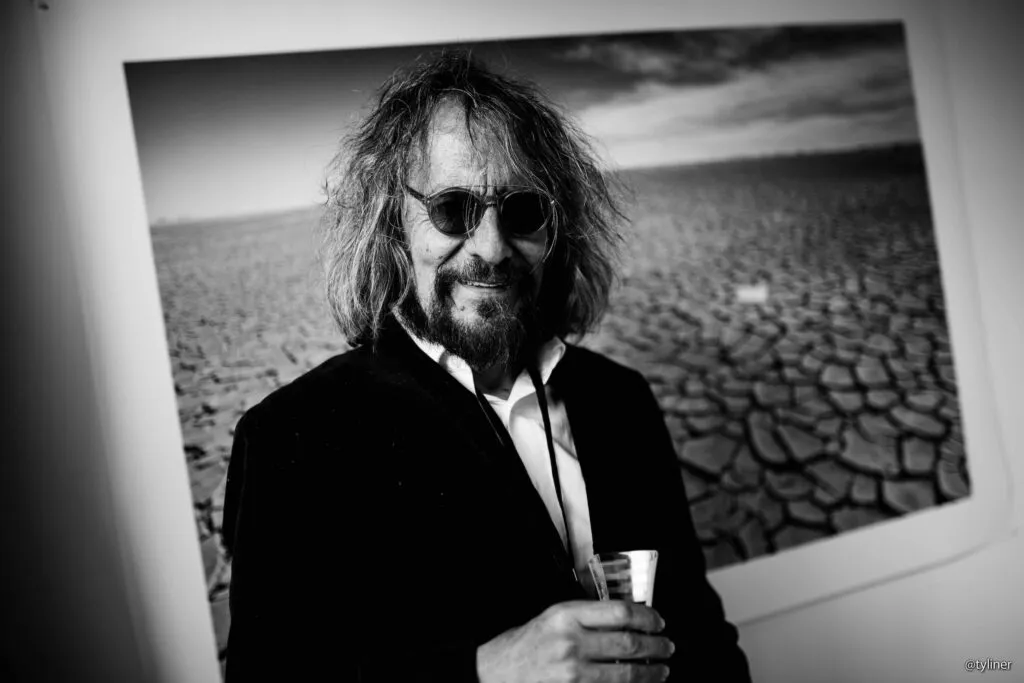

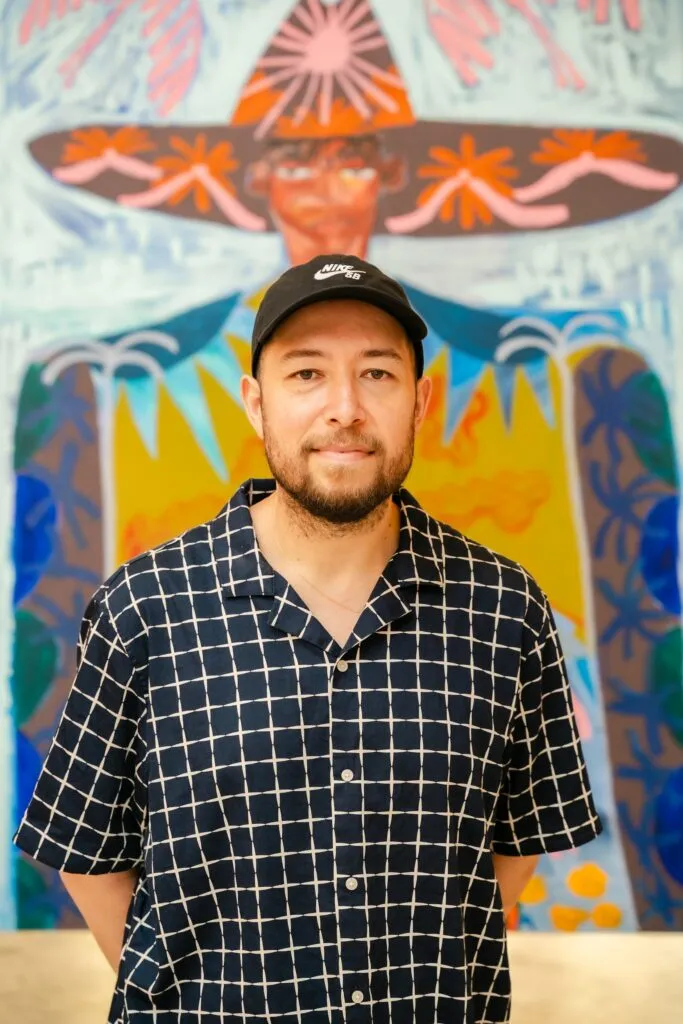
Salvadoran artist José Campos, known as Studio Lenca, creates a world where people are empowered to tell their own stories.
Displaced from El Salvador during the Salvadoran Civil War, he arrived in the United States as a child migrant, travelling overland with his mother and growing up without legal status.
Now based in Margate at Tracey Emin’s TKE Studios, his work draws on personal history and folklore, with bold, self-possessed figures that push back against invisibility and reframe what Salvadoran identity can look like.
We caught up with him to talk about the meaning behind Studio Lenca, the growing creative scene in El Salvador, and how he spends his time when he’s back there.
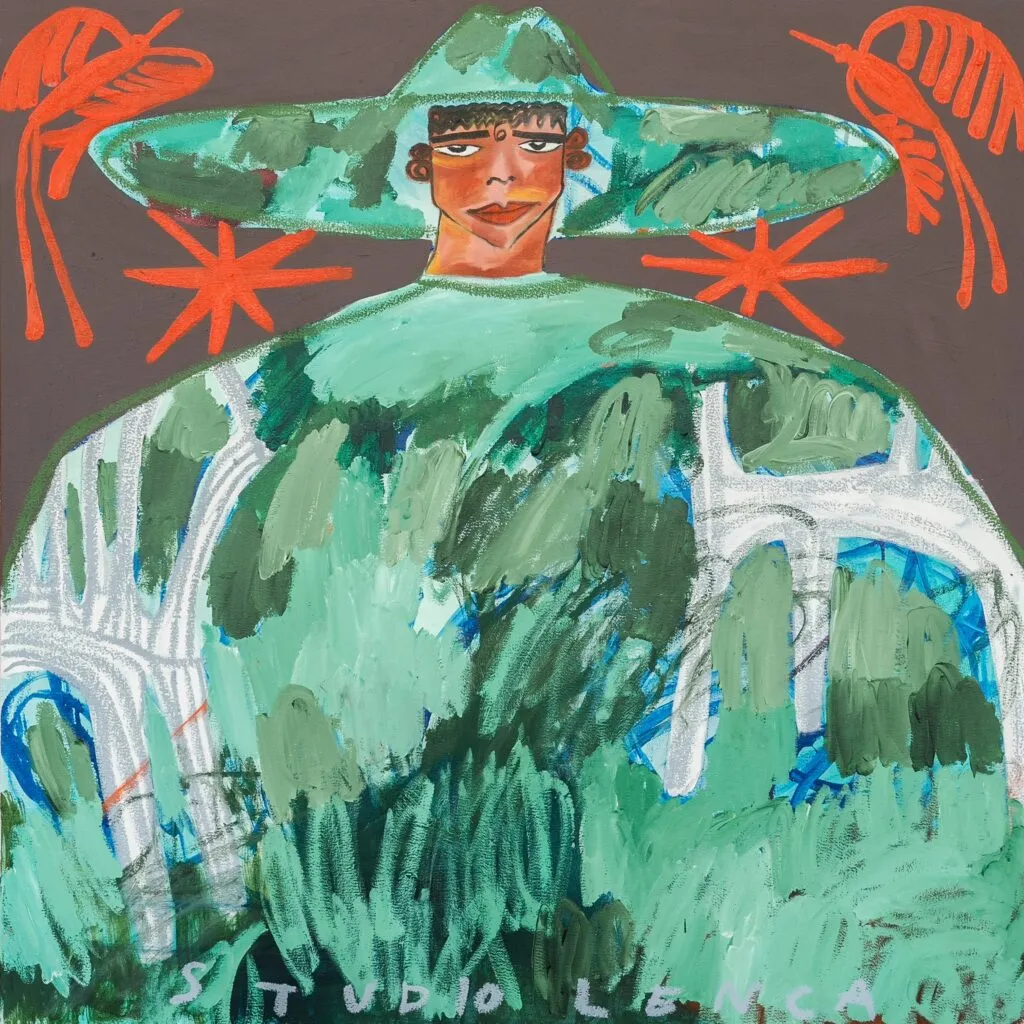
Why ‘Studio Lenca’ – what does the name mean for you?
The Lenca are some of the Indigenous people of El Salvador and Honduras – my family has links to both places.
As for ‘studio’ – it’s a big word for me. Overall, it’s a space for experimentation, but it’s also about my journey into art. When I was a child, I was creating work in the garage – that was my studio. When I was a dancer, I was in the ballet studio; when I was a school teacher, my classroom became a studio. I like the trajectory that I’ve taken to become an artist.
Lastly, it’s about a collective voice. Sometimes my work is collaborative – so it’s my story, and then at times it’s a collective one too.
How does your Salvadoran heritage – and your experience leaving the country at a young age – shape your work and life today?
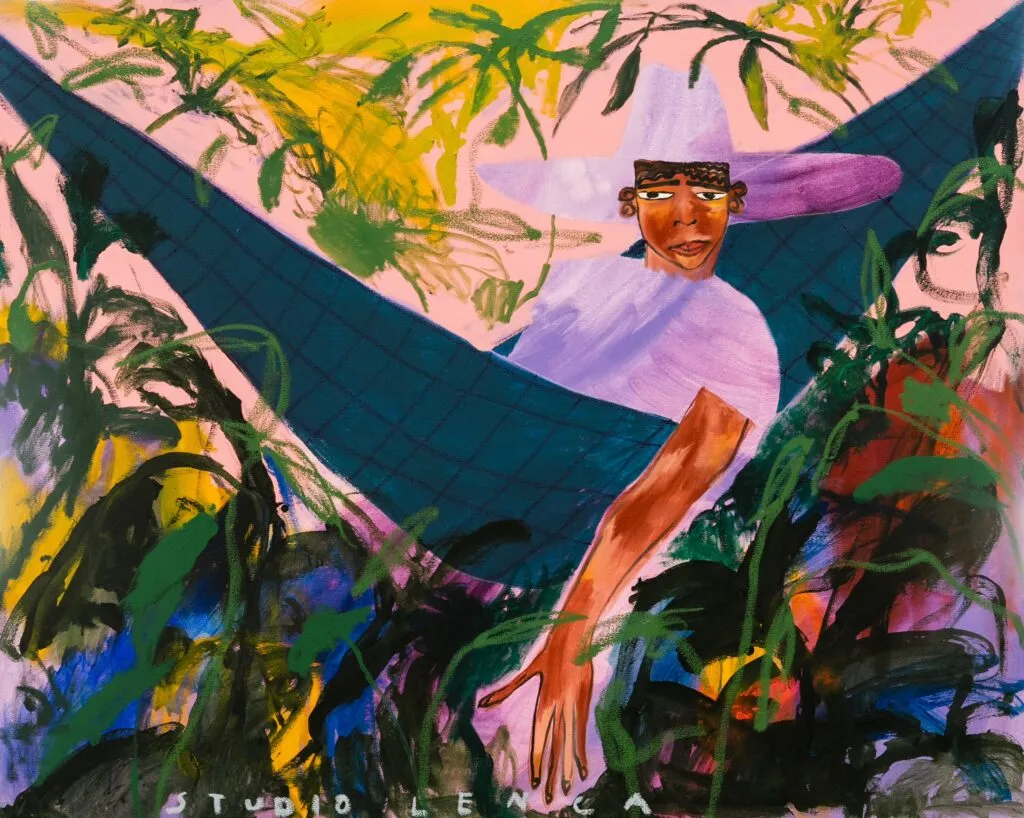
It’s the foundation of my practice – it’s everything that I do. The start of my life was very difficult, and I always think my practice is a response to that moment. Now I’m focusing on healing, and on joy, so my paintings are very colourful. They look to shine a light on narratives around diaspora communities that many people can connect with.
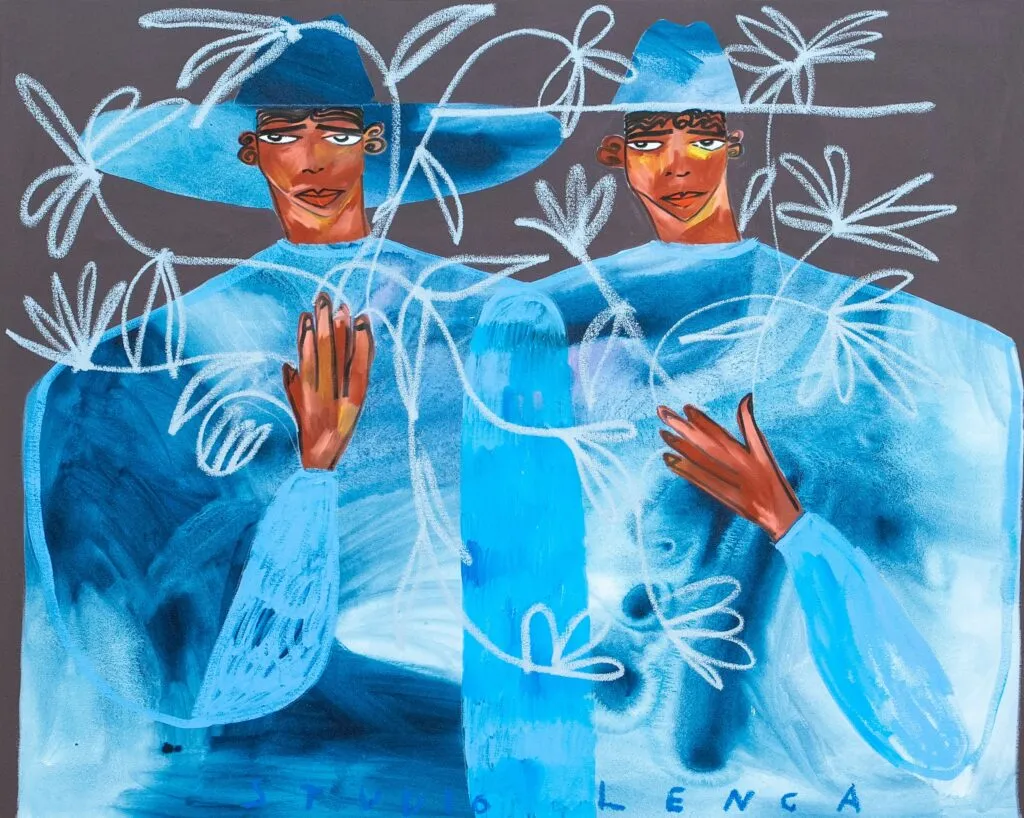
The figures in your work often wear large hats inspired by Los Historiantes. Can you tell us more about them, and what they represent for you?
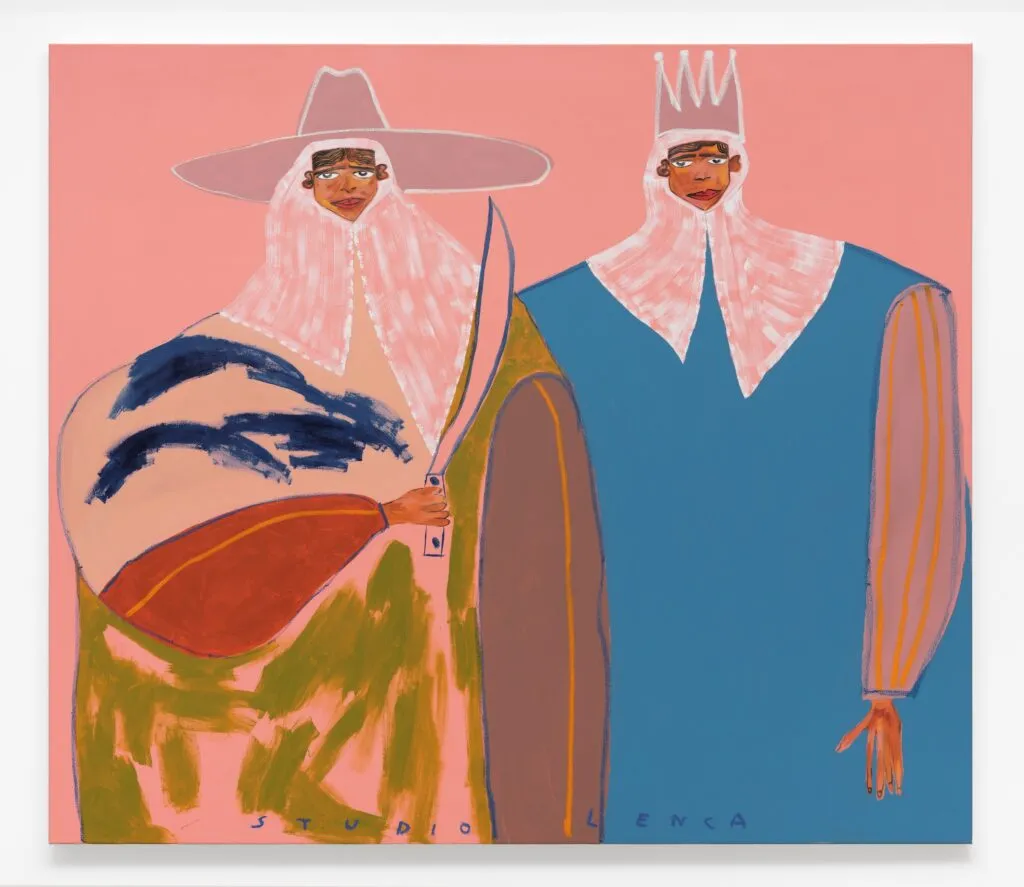
The first time I saw Los Historiantes was in the town I was born in – Santiago Nonualco, in La Paz. They were dancing in front of my aunt’s house, in these beautiful costumes. At the time, I was a teenager studying ballet, and I had never imagined there would be this tradition of dance from my town – but of course, there was.
Later on, I learned that they tell a story about Spanish colonial history – as well as agricultural influences and Mesoamerican references. It became a way of thinking about myself and where I came from.
The hat is also interesting as it connects back to my grandfather. We were from a very rural area, so he always wore a hat and carried around a machete.
You’re part of a growing network of Salvadoran artists. What’s happening on the creative scene right now, both within the country and across the diaspora?
When I go to El Salvador, one of my favourite things is to visit LFBK Espacios de Creación, which is a complex of contemporary artists. I get to learn so much about their practices there. They just moved to an old finca, close to the city, surrounded by mango trees – it’s a beautiful setting to make work in.
To start with, when I was outside the country, I wondered if there was contemporary art in El Salvador – but of course there is. There are all these artists and communities there making amazing work. I’ve noticed there is a strong critical voice within their work, which I think reflects the country’s history.
In the diaspora, there are all these amazing people from El Salvador who were forced to leave. It feels like a collective exhale – we’re working out how to be ourselves, to be the creative people we should have been. That moment in our history interrupted that, but now we’re continuing. There are incredible chefs, poets, artists, photographers – it feels like a real moment.
One big inspiration is the poet Javier Zamora, who just wrote a book called Solito. I met him when I was painting in Miami, and he was sharing his work there at the same time. It turned out he’s from a really tiny town right next to where I’m from – the world works in mysterious ways.
You’ve spoken about invisibility in the Latinx community – what does it mean for you to make art that is boldly, distinctly Salvadoran?
Salvadoran identity can be many things – our culture is not monolithic; it encompasses a multitude of identities. In my work I think it’s really important to be visible. I grew up in California in the San Francisco Mission and had my community there. I could go to shops and hear music from El Salvador, and get any ingredient I wanted.
The UK is another level removed from El Salvador. For example, we’re not recognised on the census in the UK, which says something about systematic invisibility.
When I first moved to the UK twenty years ago, I asked the El Salvador Embassy how many Salvadorans were in the UK, and they said 400. The numbers have grown since then – but, for example, to get Salvadoran food, I have to Whatsapp a lady I know who makes pupusas – she delivers them all over London to Salvadoran people.
I’m trying to create a world in my studio, so when you walk in, you can’t help but feel at home in the colours, the materials and the references. That’s kind of my new found safety. It’s like: if I don’t have this world, how can I create it for myself?

How would you describe your relationship with El Salvador today?
The fact I was displaced from the country amplifies my longing to understand it. I go back at least once a year, and when I’m there, I catch myself observing everything deeply.
I listen to people’s stories, go to as many places as I can, observe people closely and try to take everything in. I think that speaks to this larger longing to understand these fragmented parts of my identity.
When you’re back in El Salvador, how do you spend your time?
I tend to stay in San Salvador, and I make a schedule to see as many people as I can. In the past, I would stay with family and they looked after me. Now that I feel more comfortable travelling around by myself, I do a lot more – I visit museums, I go to the theatre and ballet performances, I visit artists’ studios – and do a lot of eating, too!
There’s a restaurant called El Xolo, based in the Anthropology Museum, that reimagines traditional Salvadoran ingredients in contemporary ways. I check out street food stalls, to see what the lady on the corner is selling. There’s a great taco place called Pecado Migrante, and Luma Cafe does good coffee and pastries.
In the historic centre, I love going to the National Palace – they do tours there regularly and have the most beautiful rooms with painted frescoes.
My favourite place in San Salvador is El Rosario church. It’s a very simple building, but if you look up as if towards the heavens, there is the most amazing stained glass, with all this coloured light coming through. There’s no decoration, just light. There are a lot of very ornate, beautifully adorned churches in El Salvador, but the simplicity of this one is so refreshing and poetic.
If someone were visiting El Salvador for the first time, where would you point them to get a sense of the country’s culture?
I recently went to a town called San Sebastian, in San Vicente, where they traditionally make hammocks. It was so inspiring to see people still working away on the hundred-year-old looms, and all the beautiful textiles and colours. There’s a great information centre that gives a tour on the history of the looms.
Then, Lago de Coatepeque – a volcanic lake with lots of beautiful places to stay and to eat. I love the traditional diners with tamales and pupusas – the most typical Salvadoran dish, tortillas filled with cheese, beans, or sometimes meat. I’m a big fan of more simple, typical foods, like a handmade tortilla, because I can’t get them here.
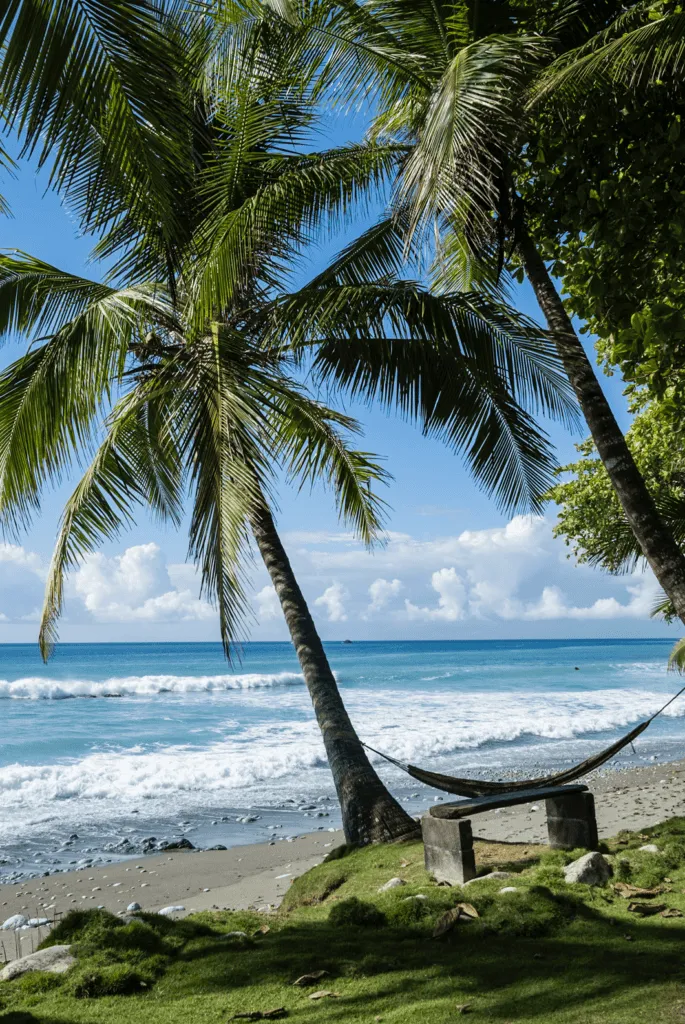
In the town of Santa Ana, there’s a beautiful cathedral. And the beaches, of course – my family goes to Costa del Sol, but there are lots of other famous ones, like El Tunco.
What’s next for Studio Lenca – any new projects or shows in the works?
I just got back from doing a self-led residency in San Salvador. That was really special as it was the first time that I put together a solo exhibition, and the first time that my family back home got to see my work. We did it in this beautiful old building, El Castillo Venturoso, which is right in San Salvador.
Next, I’ll be working with the city of Boston on a temporary public sculpture. I’ll also be travelling to Mexico City, New York, and Miami this year for different projects, and will be showing in London at Frieze.
—
Plan South America specialises in tailor-made luxury journeys across Latin America, and will soon be launching travel in El Salvador. If you’re considering an adventure in the region, we’d be happy to help.
CONTACT US
Tailor-made journeys across Latin America, designed by specialists with decades of on-the-ground experience.

Conde Nast Traveler Specialists every year since 2017