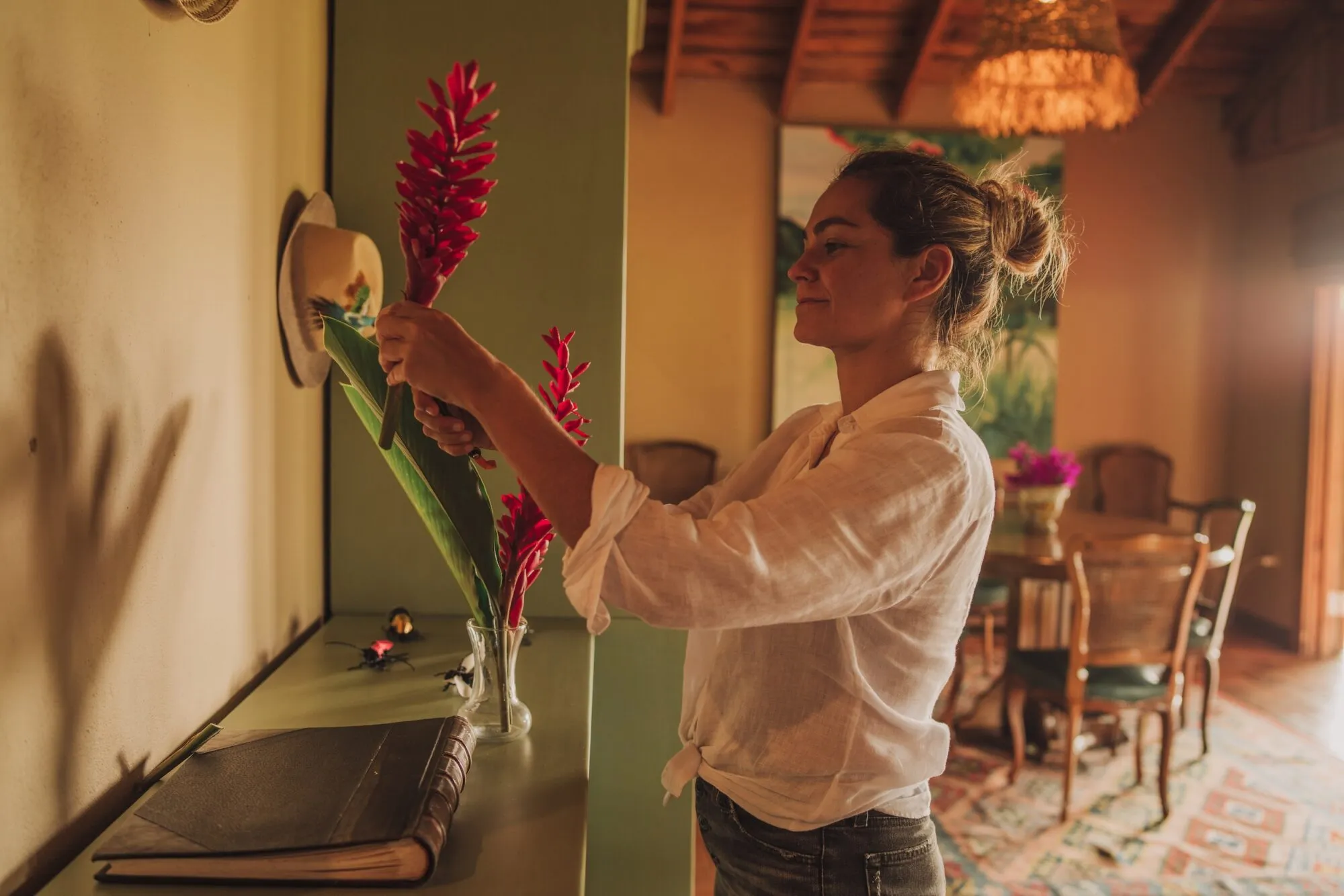
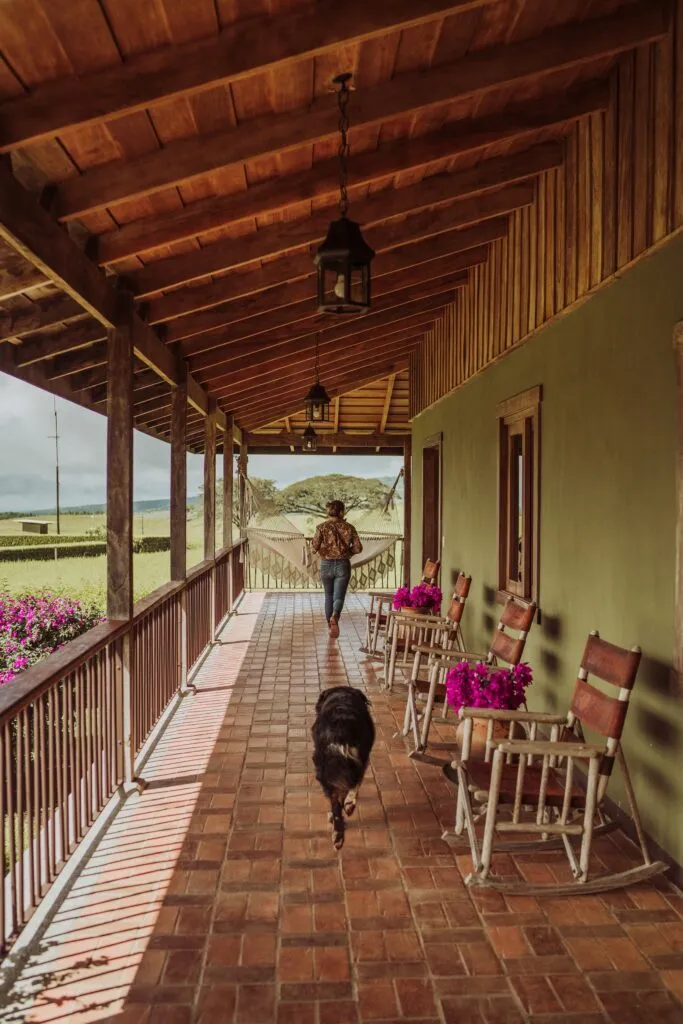
Floriana is the owner and host of Hacienda Montezuma, a traditional working ranch in northern Costa Rica and one of our favourite places in the region.
Set within 1,000 hectares of primary and secondary forest, the estate has been in Floriana’s family for generations. Usually open only to private bookings, Plan South America has partnered with Montezuma for a new series of small, seasonal retreats centred on time in nature, ancestral wellness practices, riding, and conservation-led living.
Here, Floriana reflects on how the retreat came about, what guests can expect, and her long-term vision for the land.
What first sparked the idea for this retreat?
It was inspired by my guests. Over the years, I’ve observed a transformation that happens every time someone comes and stays with us.
I have seen guests change their careers after realising there is another way of living. Others have repaired relationships with their spouses and children after recognising how constant work and distraction had pulled them away from what truly matters, especially how we choose to use our time. I’ve welcomed people in their thirties dealing with anxiety around relationships or the desire to start a family, who experienced profound inner shifts – understanding that their concerns were rooted within themselves rather than in finding external answers or the “right” person.
I began to understand that a level of healing was taking place that I had never fully imagined. This made me realise how powerful it can be to guide people into a deeper connection – not only with nature, but with themselves. These moments of reconnection happen organically here, without forcing anything.
As a Costa Rican who grew up surrounded by nature, I once took this connection for granted. Working closely with guests from large cities around the world has made me aware of how significant the global disconnection has become – and how many people are seeking grounding, clarity, and meaning.
Tell us a little about the plan for the week.
The retreat is the result of many years of exploration. It brings together everything we already do here, but with a much more intentional focus. It combines time in nature with practical tools that guests can take back into their daily life – small habits and simple practices to support the body and the way we live.
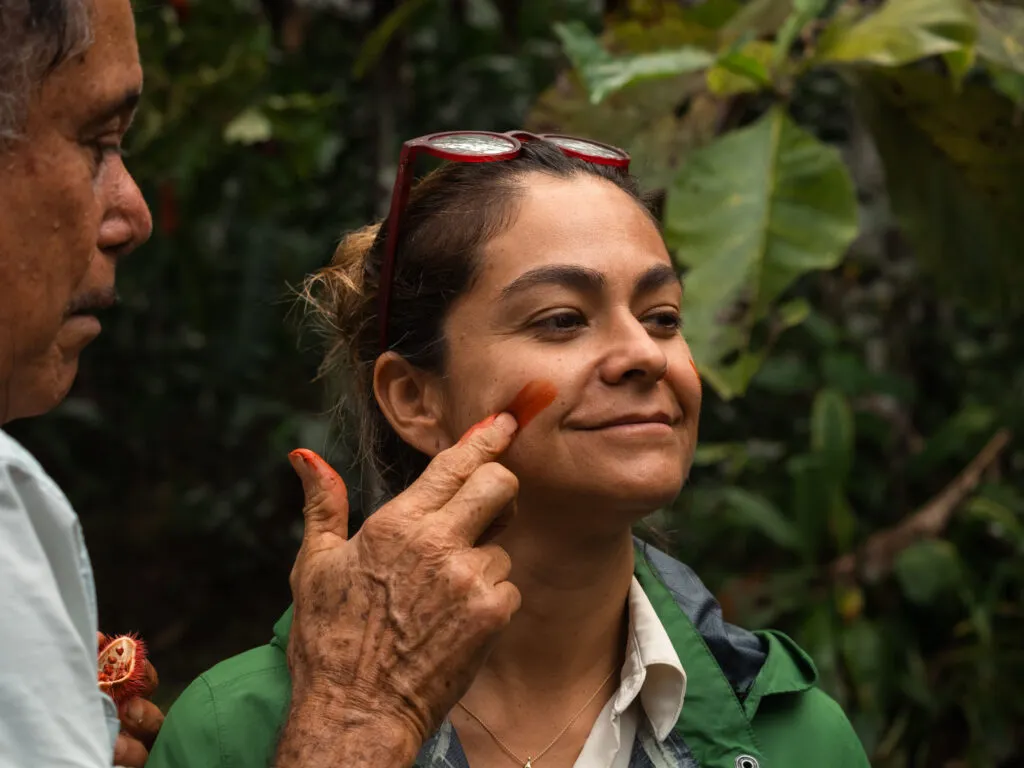
Throughout the week, there is a variety of experiences, from Gyrokinesis and horse healing to a cacao ceremony guided by a woman I deeply trust. Every therapy is one I have personally experienced and believe in. Not only do they nourish the body, but also create a sense of awareness and clarity that supports better decision-making.
Beyond the therapies, there is the simplicity of swimming in clean, natural waters, sleeping deeply, and eating well. Hacienda Montezuma has a light and energy I have felt in few other places.
You’ve put together a wonderful team of practitioners and therapists. Tell us a little more about them?
Erika, who is our coach and main guide, has an immense depth of knowledge and a lifetime of experience doing this work. I’ve worked with her for many years, and she has an extraordinary human quality and a unique ability to hold space for each person in a very personal way. She meets people where they are, offering deep support and allowing each guest to feel seen, held, and guided through their process.
Marianela, who will host the cacao ceremony, leads the most beautiful chants – I have experienced the most meaningful cacao ceremonies of my life with her. She has a powerful, stunning voice, and her singing elevates you energetically in a very profound way. You can truly feel the difference before and after the cacao ceremony – it is a very powerful and transformative experience.
We also have a team of incredible massage therapists. For me, massage is not only about physical healing, but also about feeling held, cared for, and truly nurtured – helping release emotions stored in the muscles and tissues. There is a beautiful variety of massage styles available – Thai massage, deeper therapeutic work, sound bowls – so each person can choose what resonates most with them.
Tell us about the Costaphonics listening experience.
It’s a fascinating new technology that uses technology to listen to plants and connect more deeply with the natural world, using 360-degree microphones and devices that work with vibration. It’s something very new in the world, and we’re very happy to be one of the first to bring it into a retreat – it teaches us so much about the importance of sound.
We don’t always realise how much urban noise increases our cortisol levels and stress. Cities are full of constant noise, and we’ve almost normalised it. I believe that, in the near future, people will need places where there is no noise – or rather, no artificial noise. Only natural sound: birds, water, waterfalls. These sounds support our wellbeing as humans. Real luxury will increasingly be about finding spaces where this kind of healing is possible – healing through the natural sounds of the earth.
Who is this retreat for – and what do you hope they take away from the experience?
It’s for people of any age who are genuinely seeking to feel better within themselves – not only physically, but also mentally and emotionally. Life has become increasingly complex – there is constant mental noise, many decisions to make, and an overwhelming number of responsibilities. It offers a space to slow down, reduce anxiety, quiet the mind, and realise that there are other ways of living, that feel more balanced and present.
Guests will step out of survival mode and learn how small, conscious habits and simple, practical tools can make a big difference in how we experience everyday life. One of the things I value most is when therapists empower people by giving them tools they can practice on their own. I’ve seen many retreats around the world that don’t do this. Instead of empowering their guests, they create dependency, encouraging people to return year after year because they feel they cannot access that state on their own. I don’t want that – what matters to me is offering experiences and knowledge that help people reconnect with their own capacity to regulate, restore, and take care of themselves.
I strongly believe there should always be a clear before and after when a therapy truly supports a reset of the body and mind. If there is no real shift or effect, then, for me, the therapy simply isn’t effective.

Tell us a bit about the history of Montezuma – how did it first begin, and what drew your family to this part of Costa Rica?
Hacienda Montezuma was a very important estate many years ago. It was originally a much larger property, and for a period of time, it was owned by the United Fruit Company. Over the years, it was sold to several families we know, and gradually the land was divided into smaller and smaller farms. At that time, the model was focused entirely on volume rather than quality. The cattle were fully stabled, not grass-fed, and the land suffered significant contamination as a result.
When Hacienda Montezuma came into our hands, we made the conscious decision to do something completely different. Our vision was to begin healing the land – restoring the soil, regenerating the ecosystem, and cleaning what had been deeply impacted over decades of intensive use. This process took many, many years, but it marked the beginning of a new chapter rooted in regeneration, and respect for the land.
How has Montezuma evolved since then?
From the beginning, our vision was to create a living example of coexistence – where organic agriculture, holistic cattle management, hospitality, water stewardship, conservation, and wildlife protection could exist in balance. This process has been one of constant learning and trial and error.
One of our biggest challenges has been the responsibility of managing the land itself. Choosing to work without pesticides, especially within cattle management, has required commitment, patience, and significant investment. Holistic management is not easy, but we believe it is the right long-term decision for the planet and for our family.
After ten years without pesticides, the results are visible. The land is healthier, birdlife has returned, the food is richer, and the soil continues to improve with each test. We are deeply conscious of our responsibility to protect the water sources that originate on the property and flow into important rivers like the Tenorio River, which sustain both communities and ecosystems.

How can guests get involved with ranch life?
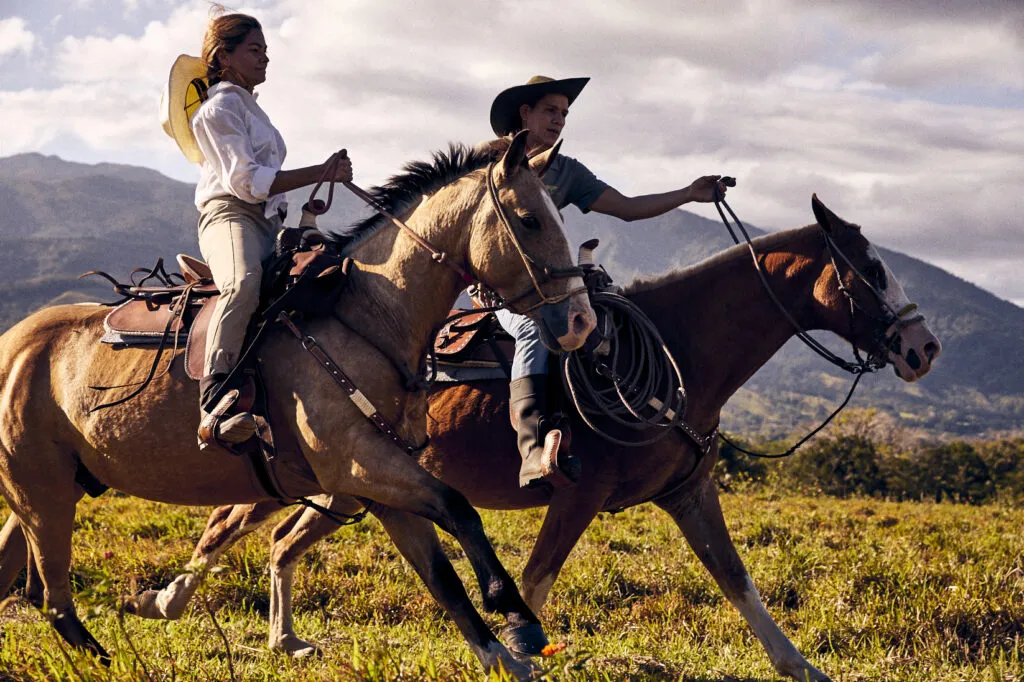
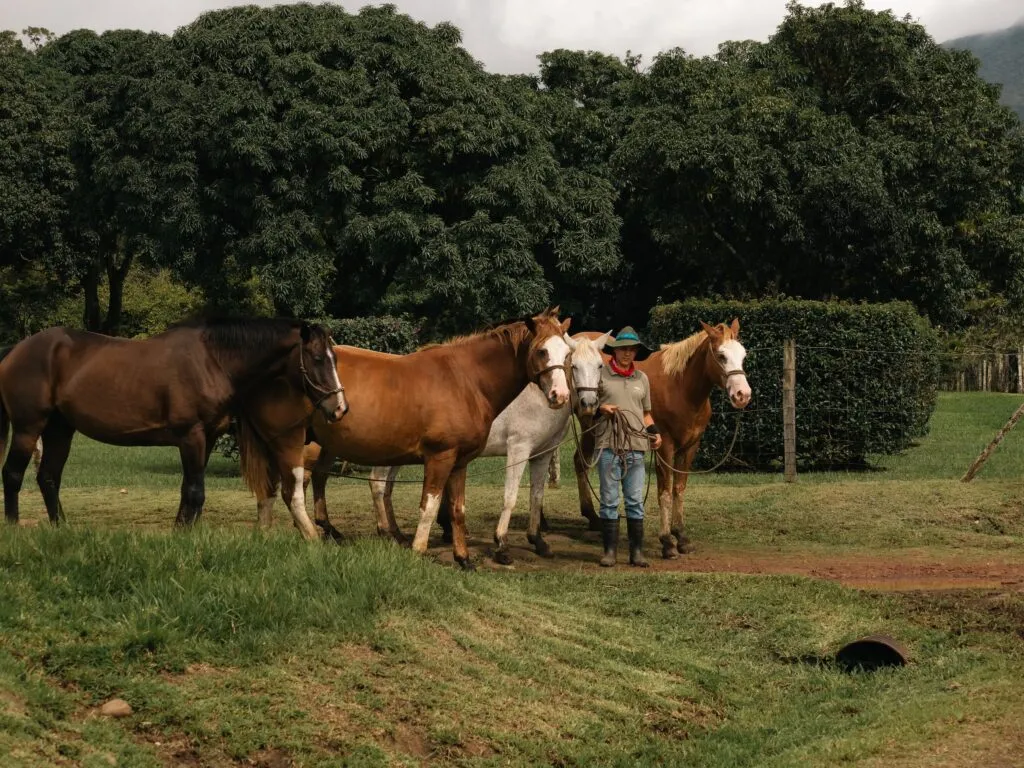
We don’t change our way of life to create tourism activities. Instead, we invite our guests to experience the reality of work that truly needs to be done, accompanying our sabaneros and experience the daily rhythm of life on a Costa Rican ranch. They spend time in our organic gardens, where they can see firsthand what pesticide-free agriculture looks like and how nutrient-rich food can be grown naturally.
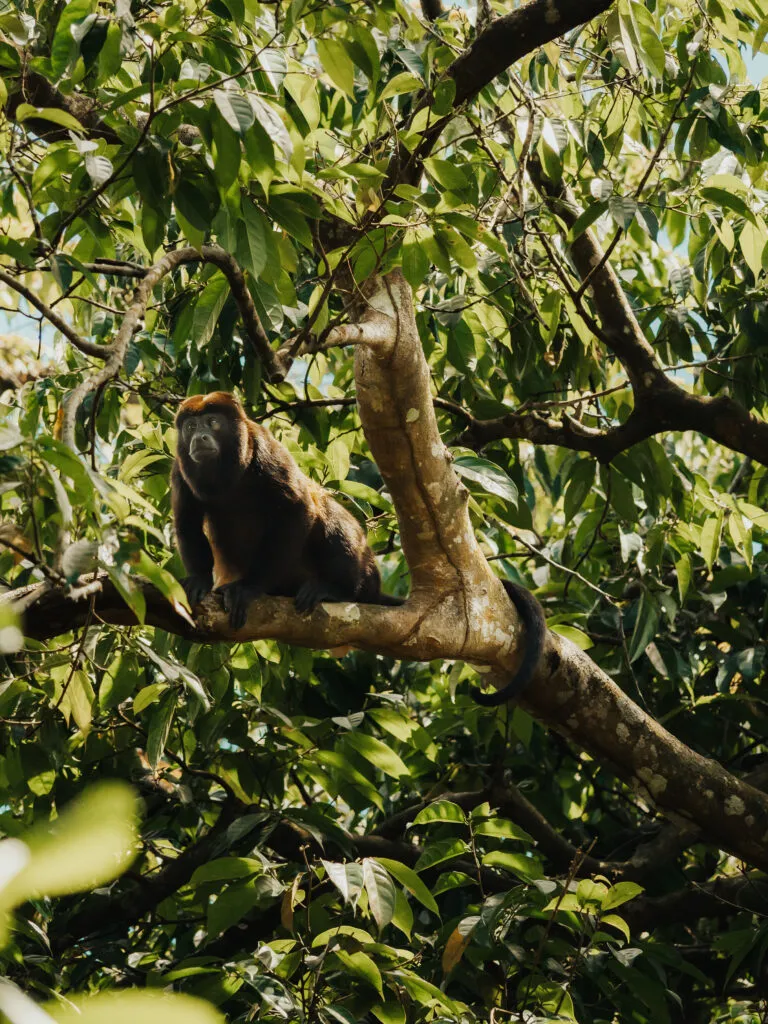
They can help with conservation and research, participating in setting up camera traps alongside naturalists in both primary and secondary forest, supporting research on species such as the Baird’s tapir, as well as jaguars, pumas, and ocelots. There are also broader conservation efforts through close collaboration with Tapir Valley and Centro de Rescate Los Pumas, a wildlife rescue centre dedicated to the protection and rehabilitation of a wide range of native species
Illegal hunting still exists – so we conduct regular horseback patrols to protect the land and wildlife. Sometimes guests join us on these rounds, helping monitor the property, check camera traps, and better understand what happens on the land at night.
What is your vision for the future of Montezuma?
For me, it’s deeply rooted in legacy. More than anything, we want it to stand as an example for our family, for our community, and for the planet.
Our vision is to continue building a strong, conscious community that actively involves the people from the surrounding town. We want to work more closely with them through food, organic farming, natural crops, and even artisanal practices like cheese making.
A big part of our goal is education, sharing knowledge in a way that is accessible and affordable, so these practices are not seen as something exclusive or expensive. We hope to support local families in learning how to grow, produce, and sell their own food directly, without intermediaries, empowering them economically while caring for the land.
Protecting our water sources will also remain a priority: keeping the springs deeply protected, continuing to reforest, and caring for the ecosystems that sustain life far beyond our land. Learning never stops for us, and we hope Hacienda Montezuma always remains a place of experimentation and curiosity.
FIND OUT MORE
Discover our upcoming retreat at Hacienda Montezuma from 4-9th March 2027.
Conde Nast Traveler Specialists every year since 2017
Related Stories

Argentina’s Wine Country: Top Vineyards & Lodges
Offbeat Mexico: Our Favourite Pueblos Mágicos & Rural Retreats
Best Places in Mexico for Families
Into Gaucho Country: Argentina’s Best Estancias
@plansouthamerica