
FIELD NOTES: BY HATTIE MILLS
The Brazilian Amazon is often imagined as vast and impenetrable. The Tapajós River, however, offers an unexpectedly different perspective.
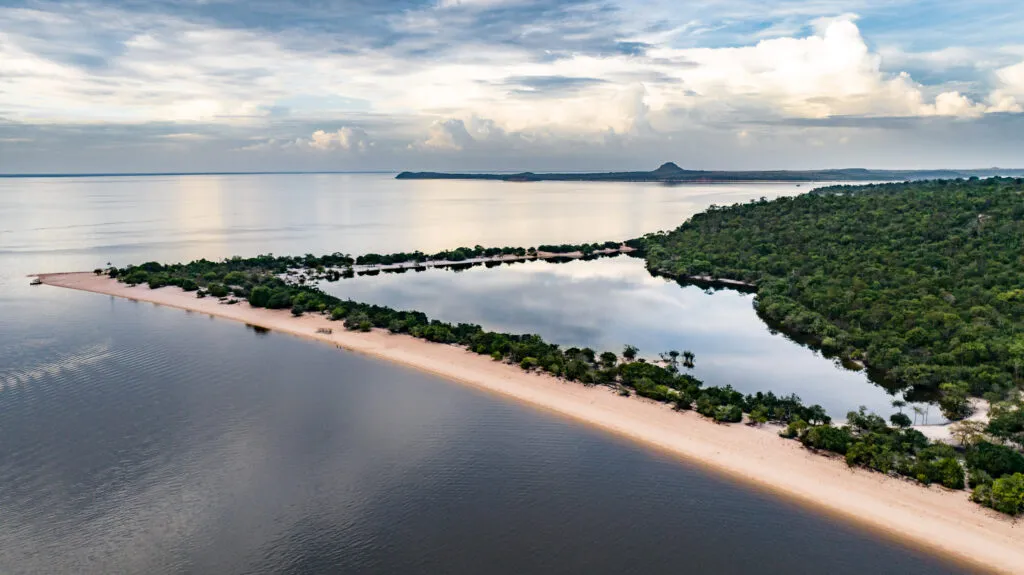
Wide, crystal-clear, and lined with white-sand beaches, it feels far removed from the dense rainforest one might expect.
Travelling by traditional wooden riverboat, our Director of the Americas, Hattie Mills, explored this stretch of water, meeting the communities that depend on it. Here, she shares her experience.
Part of me wondered if I was in the right place.
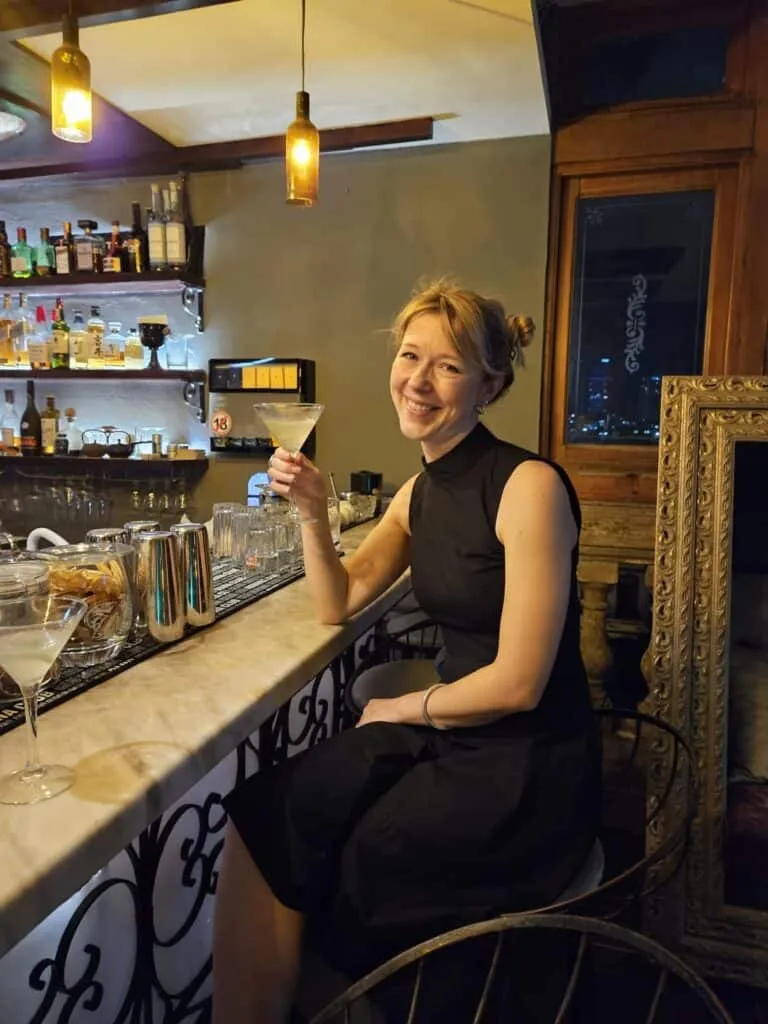
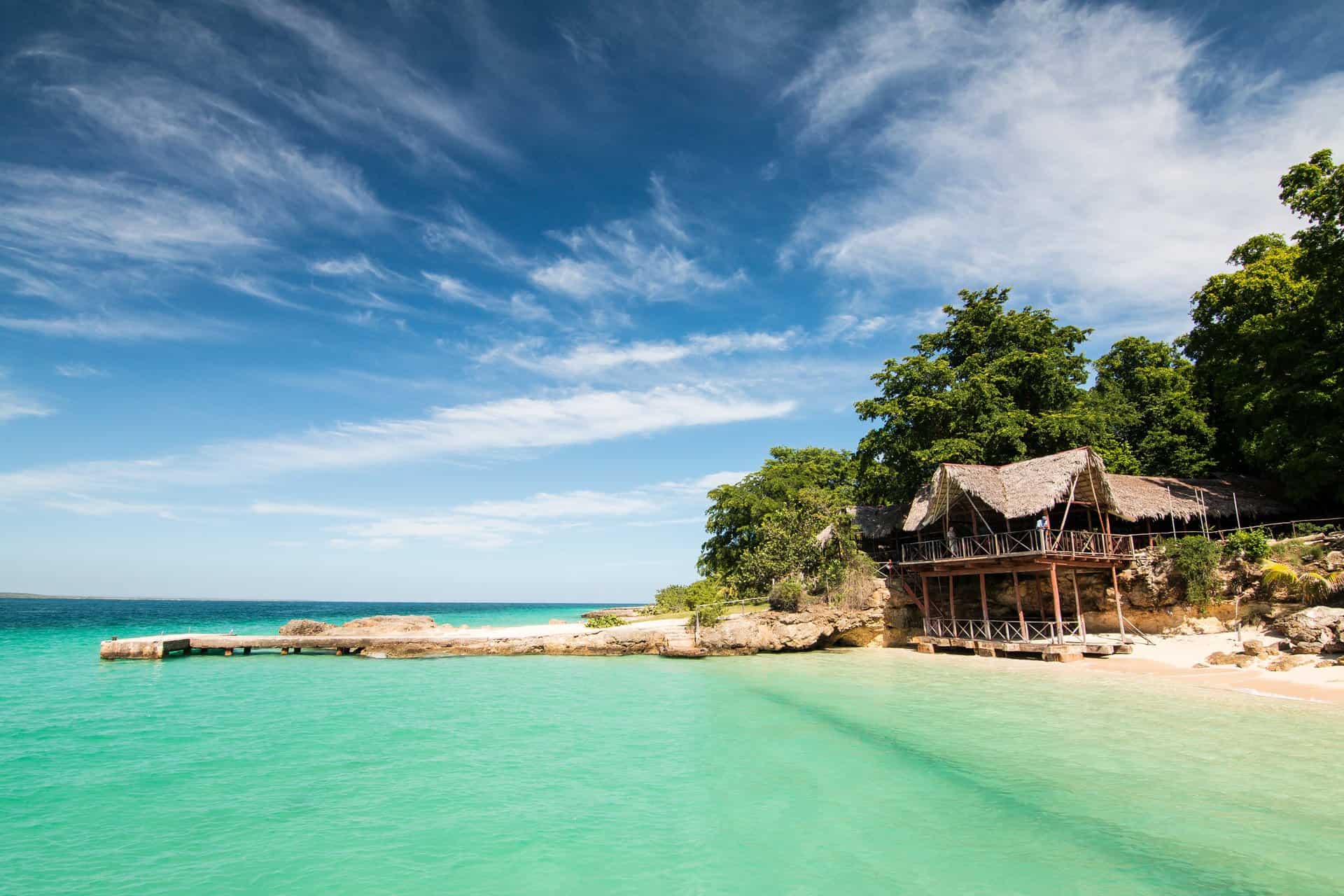
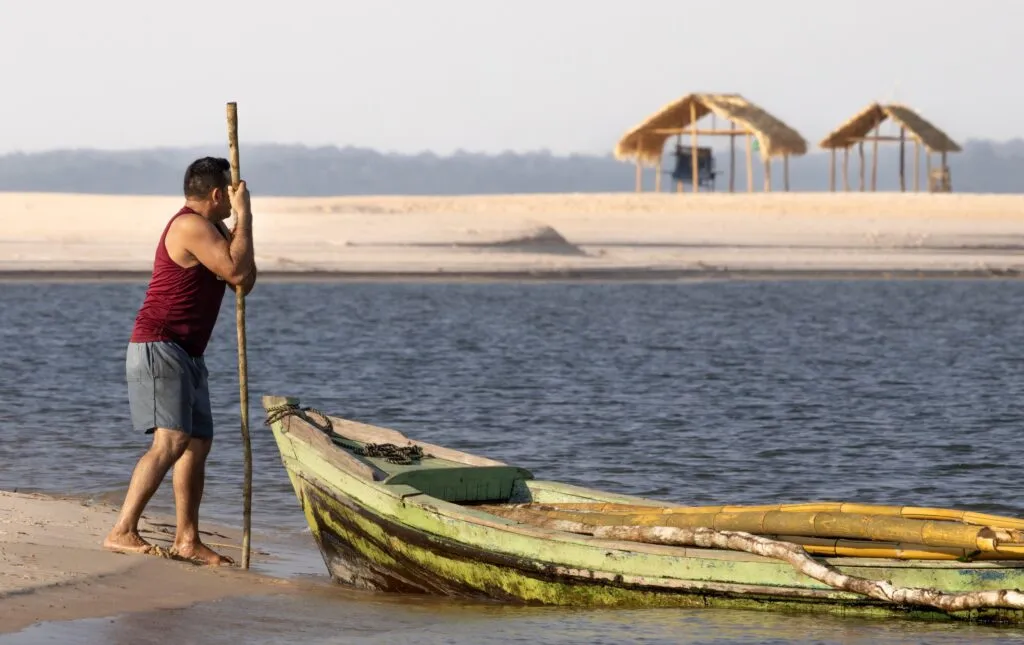
We were on a white sandy beach, clear waters stretched far into the horizon and we had sundowners in hand. This wasn’t the Caribbean sea, but the Tapajós river in the middle of the Brazilian Amazon.
Previous experience in the Amazon meant I was ready for close encounters with creepy crawlies, dark waters, dense vegetation, mozzies, intense humidity and jungle thrum.
Here, the water was clear, you could just about see the riverbanks and the jungle beyond it, and it was quiet save for lapping water, birds and passing boats.
Our vessel for the 3-night trip was the Belle Amazon, a pretty 8-cabin wooden boat with three decks, that gently navigates the tributaries of the world’s most famous river.
We boarded just in time for lunch, sitting around the large communal table to enjoy prawn and manioca leaf soup, beef stew, fish and mixed salads, As we ate, the engines started and the journey began.
Over the next few days we would sail the Pará tributaries, stopping regularly to meet local forest guardians to hike through the jungle, visit villages producing honey from stingless bees, spot sleeping sloths high up in the forest canopy in the backyards of locals. All punctuated by regular stops for a swim or a snooze on the beaches that appear in low-water season.
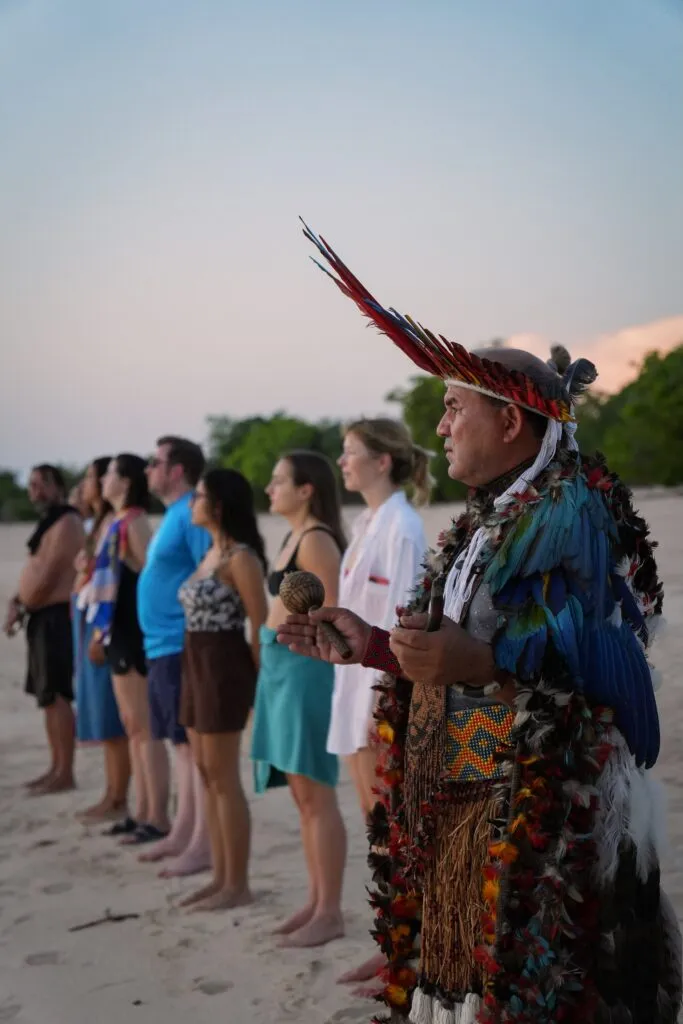
By osmosis, we would learn: about the communities and legends of the Amazon, the difficulties they face with the constant threat from agriculture, illegal mercury mining and deforestation. About local figureheads who are fighting back and initiatives such as Movimento Refloresta which educate the next generation of Brazilians by inviting them to stay in indigenous communities.
Through Lalah too, our inspiring on-board guide and local activist who provided context, history and fascinating anecdotes. She would become emotional as she spoke to us about the struggles her community faces.
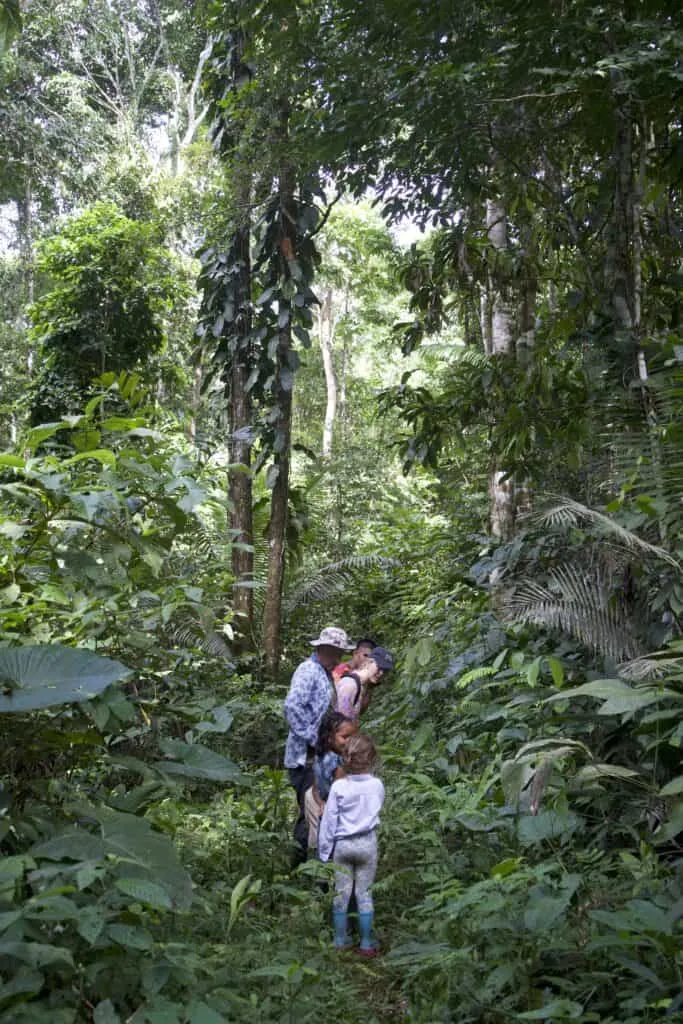
A favourite moment was the halfway point on the Piquia jungle trail hike. Piquias are the enormous centenary trees that the locals revere and protect. En route we stopped frequently with our community guide to observe dripping sap, perfumed ants, scented bark, howler monkeys, snakes, butterflies the size of plates, dung beetles rolling dirt, bees and noisy cicadas.
Hot and ready for a break, we reached a clearing in the forest where some locals had already stopped to cool off at a meandering brook. The water was transparent aquamarine and the bottom the softest white sand and a gentle current. We had been invited to a little corner of paradise. I could imagine my kids adoring it and wanting to spend the whole day at this beautiful spot. We refreshed and refuelled on the picnic the team had prepared of fresh juices, pineapple, avocado, bananas, nuts and cake.


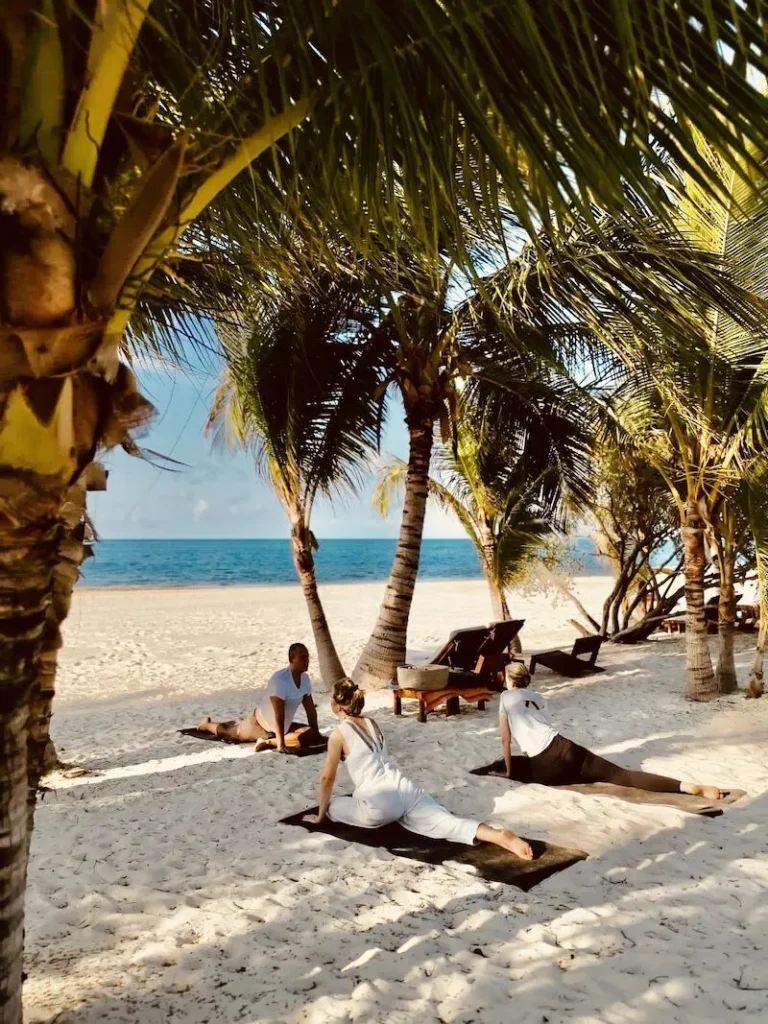
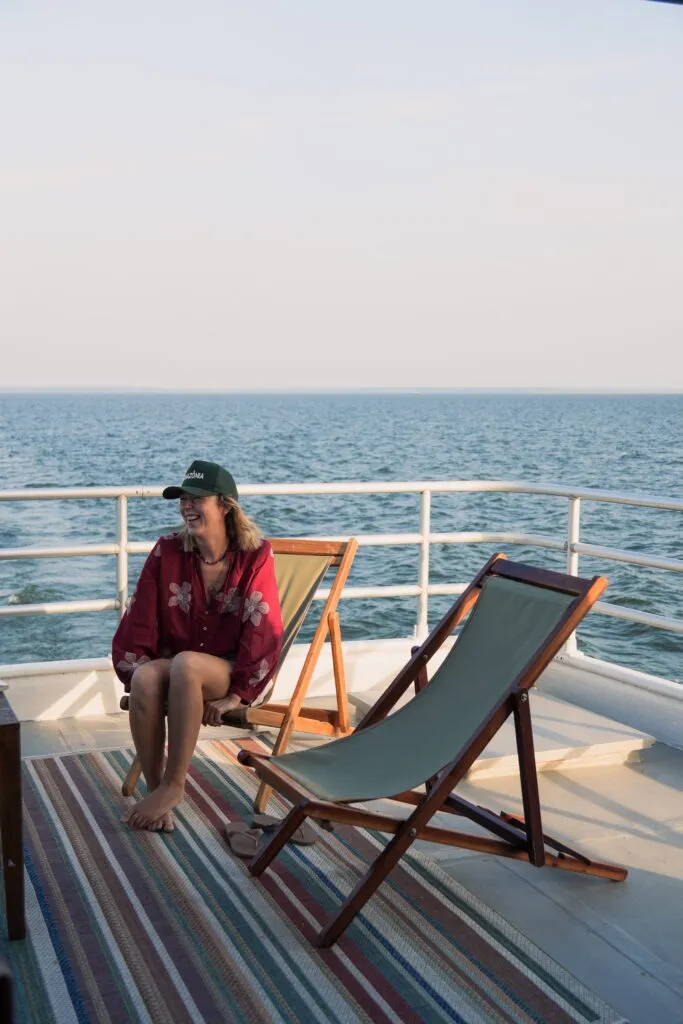
The boat is kitted out for groups with a big dining table on one deck, a bar, sitting area and terrace on another and the top deck is perfect for stargazing at night and yoga in the morning. The crew can even set up hammocks if you want to sleep under the stars. Skiffs are used to go to ashore, and they can also be used for watersports.
For me, this is up there as one of the most comfortable yet inspiring ways to explore the Amazon, especially for multi-generational groups. It’s a fantastic hybrid of adventure, education and relaxation. It’s experiential and informative for guests. For locals, it’s a way of educating and generating income.
As Maria from the Aná community said, ‘You protect what you know.’ The more people who experience and learn about this region, the more there will be to protect it.
Good to Know
- The Kaiara boats don’t have age restrictions.
- There are two other boats in the fleet, Tupaiu (4 cabins) and Delfin (12 cabins).
- It always rains in the Amazon, but some months it rains more than others.
- July-Dec is when there are bigger beaches. The first half of the year, you get smaller beaches but more boat activity and more opportunities to spot animals as you’re closer to the canopy.
- Food is a highlight on board. Local ladies prepare all sorts of regional dishes made with a huge variety of fruit and vegetables.
CONTACT US
Tailor-made journeys to Latin America, designed by specialists with decades of on-the-ground experience.

Conde Nast Traveler Specialists every year since 2017