
The Yucatán Peninsula sits atop one of the largest underwater cave systems on earth.
Beneath the jungles of Mexico’s Riviera Maya lies an enormous labyrinth of flooded caves and underground rivers, stretching for hundreds of miles through the limestone bedrock. Thousands of cenotes – freshwater sinkholes – puncture the surface, connecting to this underground world of crystal-clear rivers, vast chambers and ancient geological formations.
For the Maya, cenotes were sacred places, believed to be gateways to the underworld. Today, they have made the Yucatán one of the world’s great diving destinations. Recreational divers of all levels of experience can explore their sunlit caverns and incredibly still waters, while certified cave divers come to explore some of the largest and most celebrated underwater cave systems on the planet.
Cavern Diving in the Yucatán
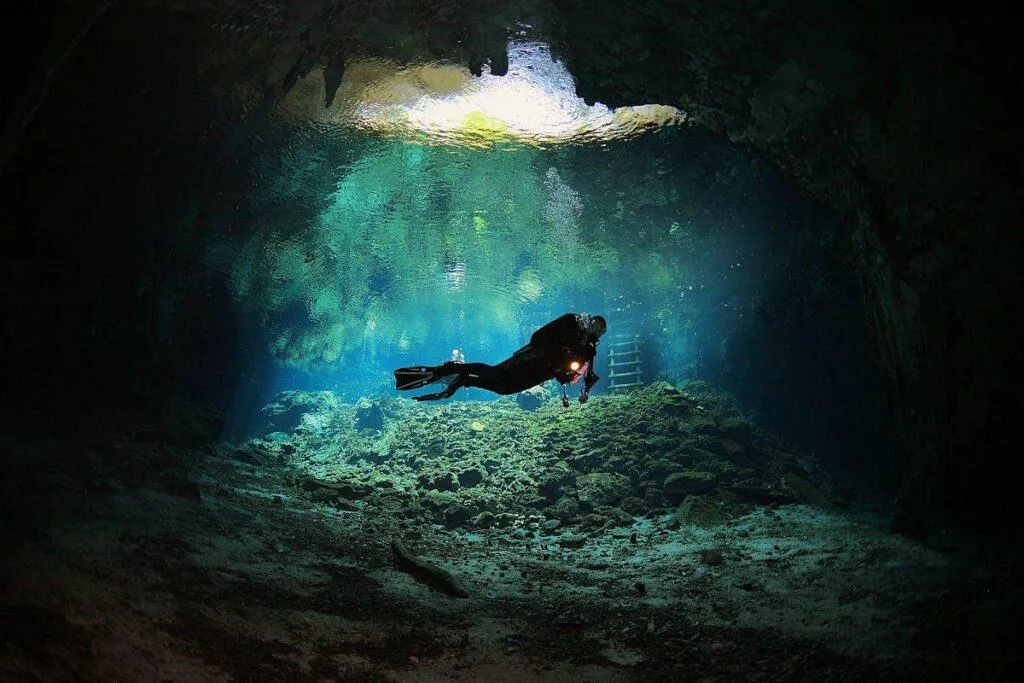
For most divers, cavern diving is the ideal introduction to the Yucatán’s underwater world. Unlike cave diving, recreational cenote dives remain within the daylight zone, with a visible route back to the surface at all times, and most sites can be explored by Open Water divers.
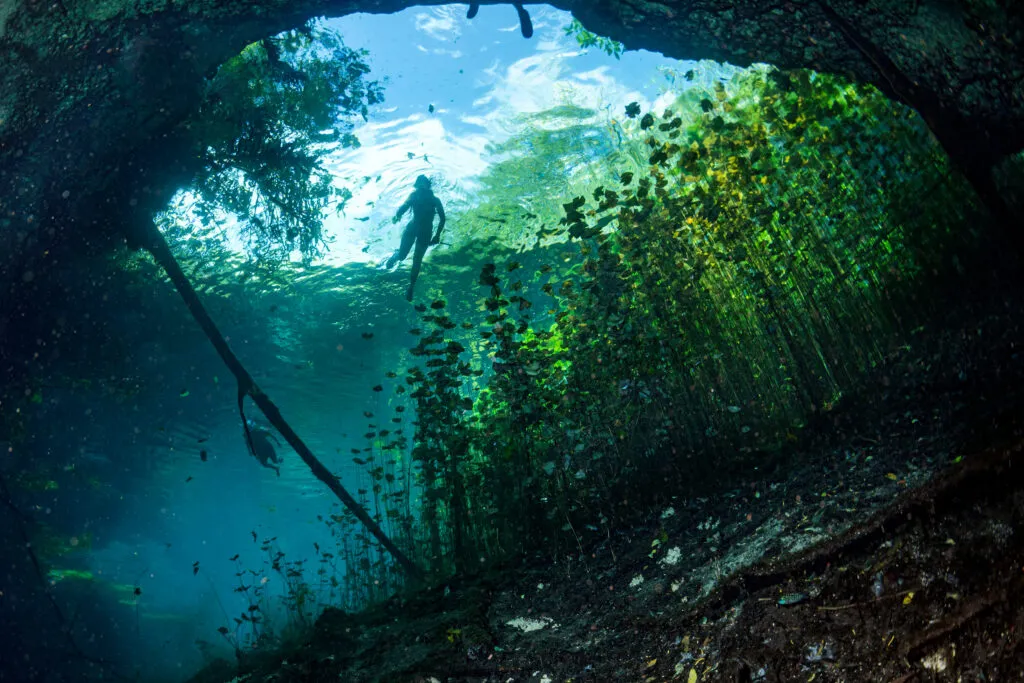
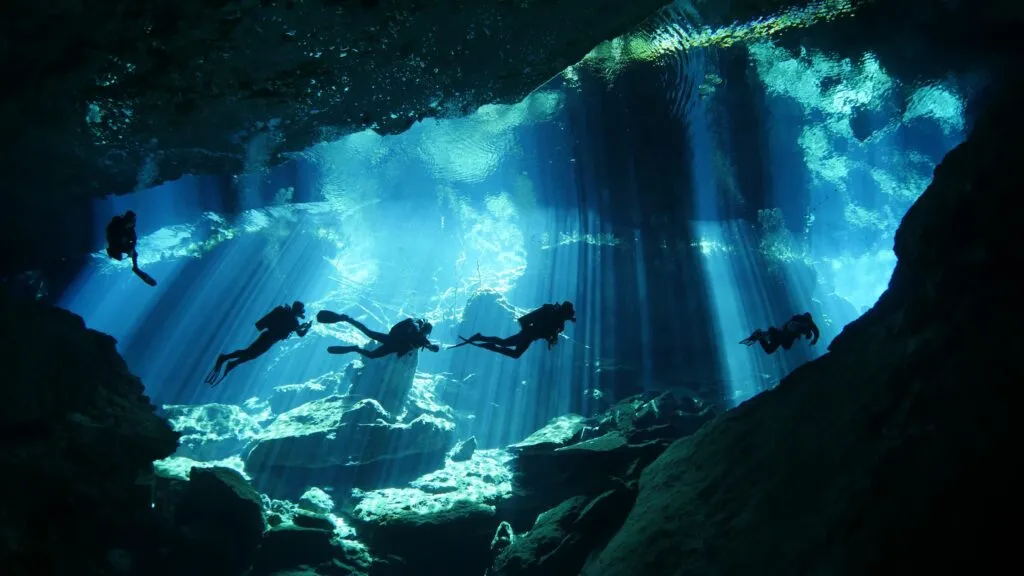
The sensation is entirely different from ocean diving: there are no waves, no currents and very little marine life. Visibility is extraordinary, typically exceeding 30 metres and often feels virtually limitless, with sunlight filtering through openings in the limestone above to illuminate the hidden caverns.
Dos Ojos – two eyes – is where many divers start. Its flooded passages wind between stalactites, stalagmites and vast chambers illuminated by shafts of blue light from above. Nearby Chac Mool is known for its haloclines, where fresh and salt water meet and the landscape seems to ripple and blur in front of your mask. Dreamgate is smaller and more intimate, with dense limestone formations and narrow passages that feel far removed from the Caribbean coast only a few miles away.
For more experienced divers, cenotes such as Angelita and El Pit are among the Yucatán’s most sought-after dives. Angelita is famous for the dense hydrogen sulphide cloud suspended around 30 metres below the surface; descending through it feels like dropping into a fog-filled river valley, with fallen trees emerging from the haze below. El Pit is a sheer limestone shaft where sunlight penetrates deep into the water column, creating dramatic beams of light that have become some of the most iconic images in Mexican diving. These dives require Advanced Open Water certification, confidence at depth and excellent buoyancy control.
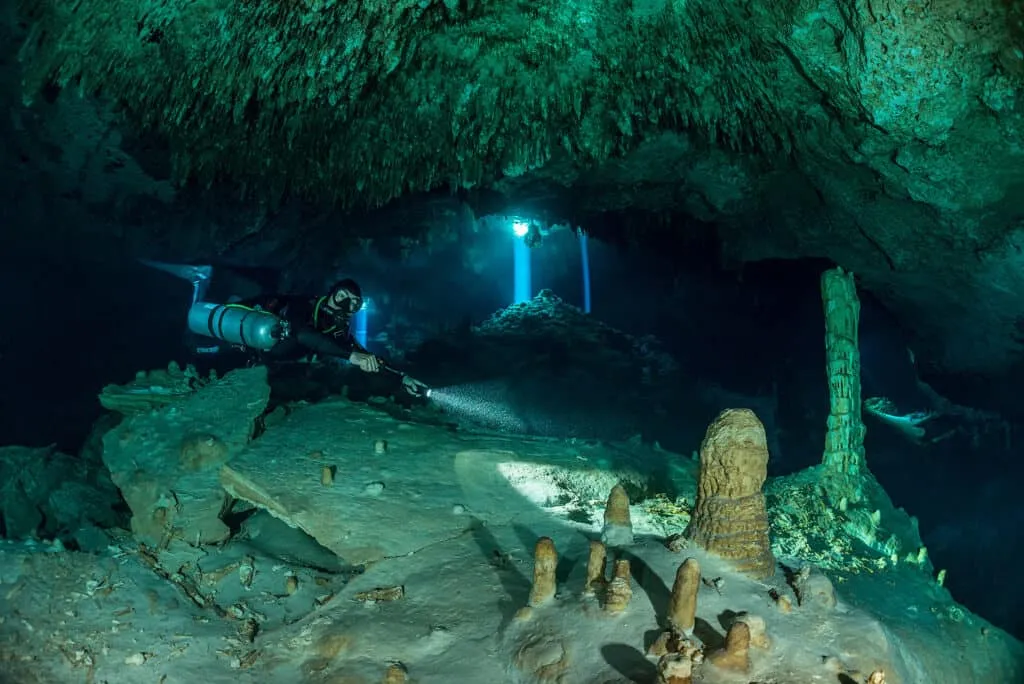
Cave Diving in the Yucatán
For qualified cave divers looking to explore these systems, we can arrange specialist guides and instructors with decades of experience working in the Yucatán. The Sac Actun and Ox Bel Ha systems are among the longest underwater cave networks ever discovered, with hundreds of kilometres of mapped passages stretching beneath the jungle. Dives here can last several hours, passing through tunnels, restrictions and chambers that remain largely unchanged from when they first flooded thousands of years ago.
Advanced routes through Dos Ojos remain among the most sought-after dives in the region, while systems such as Tajma Ha reveal extraordinary limestone formations and light effects.

Reef, Wreck & Shark Diving on Mexico’s Caribbean Coast
Beyond the cenotes lies the Mesoamerican Barrier Reef, the second-largest reef system on Earth. Cozumel is the standout. Its reefs are among the healthiest in the Caribbean, with drift dives along coral walls, swim-throughs and frequent encounters with turtles, eagle rays and reef sharks. Closer to the mainland, Puerto Morelos offers quieter diving and one of the region’s best wrecks: the C-56 Juan Escutia, a former minesweeper now lying beneath the reef.
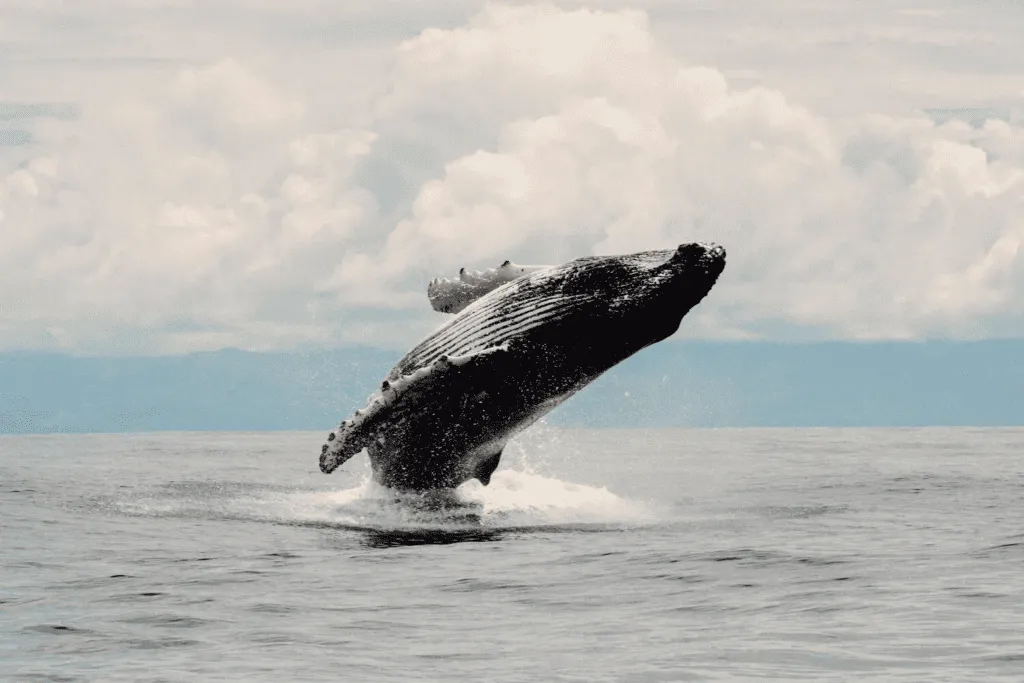
Between November and February, experienced divers can encounter bull sharks off Playa del Carmen. Come summer, the waters around Isla Mujeres and Holbox host seasonal aggregations of whale sharks. While encounters take place by snorkel rather than scuba, swimming alongside the world’s largest fish remains one of Mexico’s great wildlife experiences.
Planning a Diving Journey Through the Yucatán
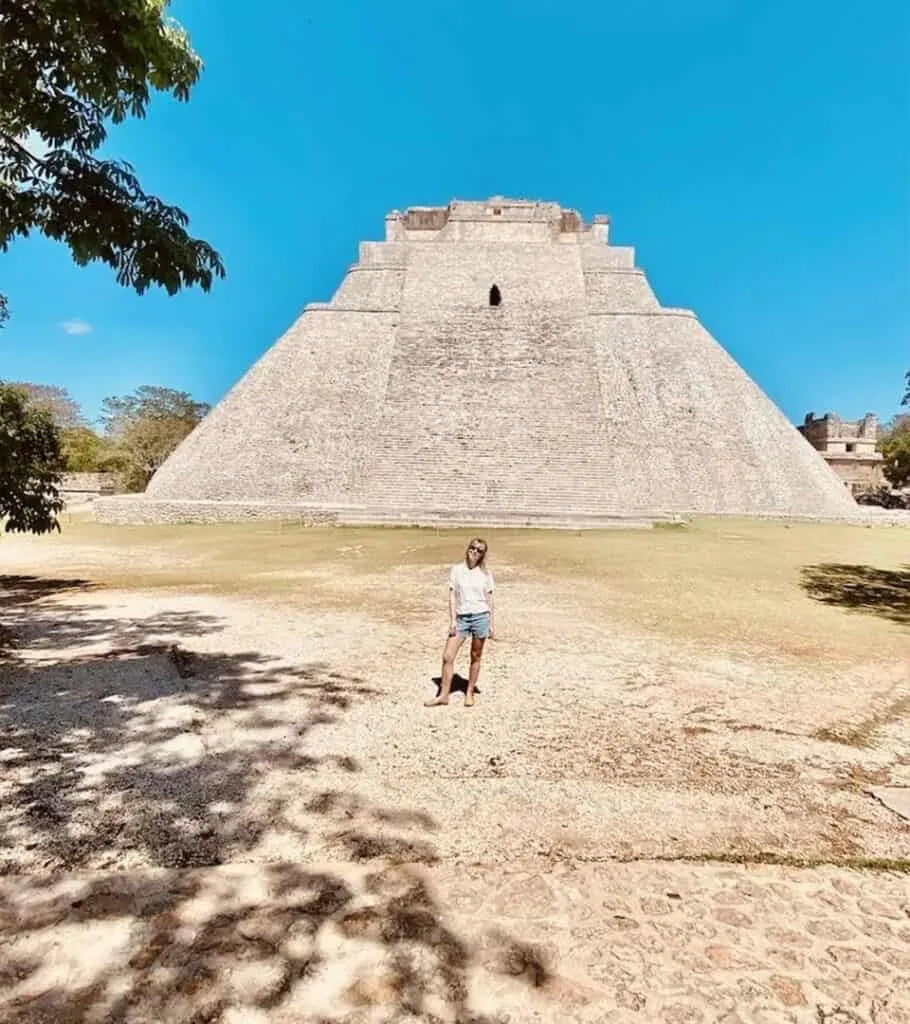
Many travellers spend a few days diving as part of a wider exploration of the peninsula. We work with our specialist guides and instructors to build a trip around the cenotes, with sites chosen according to certification level, conditions and interest. Between dives, you might explore the Maya cities of Uxmal and Ek Balam with a leading archaeologist, head to a private hacienda for a Mexican cooking class, or road trip through its colourful colonial villages and towns.
Our favourite stay is Chablé Yucatán, a beautifully restored hacienda hidden in the jungle. For families and groups of friends, we have the keys to some of Mexico’s finest private haciendas, some with their own cenotes.
For those with more time, Mexico City offers some of the finest food, architecture and museums in the Americas, and Oaxaca brings Indigenous culture and crafts, along with world-class food and mezcal traditions.
Diving is possible throughout the year, though we generally favour the drier months between November and May for the best overall conditions.
CONTACT US
Tailor-made journeys to Latin America and Antarctica, designed by specialists with decades of on-the-ground experience.

Conde Nast Traveler Specialists every year since 2017